The United Nations is calling for answers from the Papua New Guinea government over its cancellation of controversial SABL leases and the use of Forest Clearing Authorities as cover for illegal large-scale logging operations.
In a public letter sent last week, the UN’s Committee for the Elimination of Racial Discrimination (UNCERD), says it is concerned by reported delays and a lack of transparency in the revoking of Special Agriculture Business Leases and the audit of FCA logging licences.
A national Commission of Inquiry in 2011 found almost all SABL leases issued over customary land were unlawful due to corruption and mismanagement and in June 2014 the National Executive Council endorsed the recommendation the leases should be revoked.
However, since then there has been a complete lack of transparency over which leases have been cancelled and which remain and affected communities have been denied any effective remedies including fair and just compensation for land and resources illegally occupied or damaged.
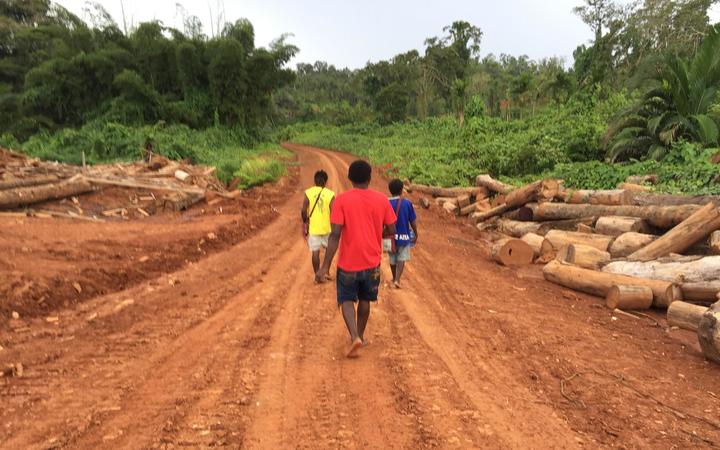
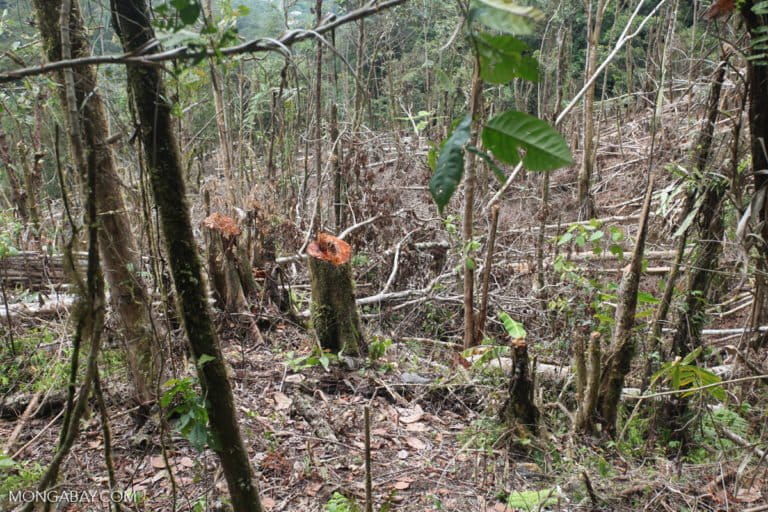
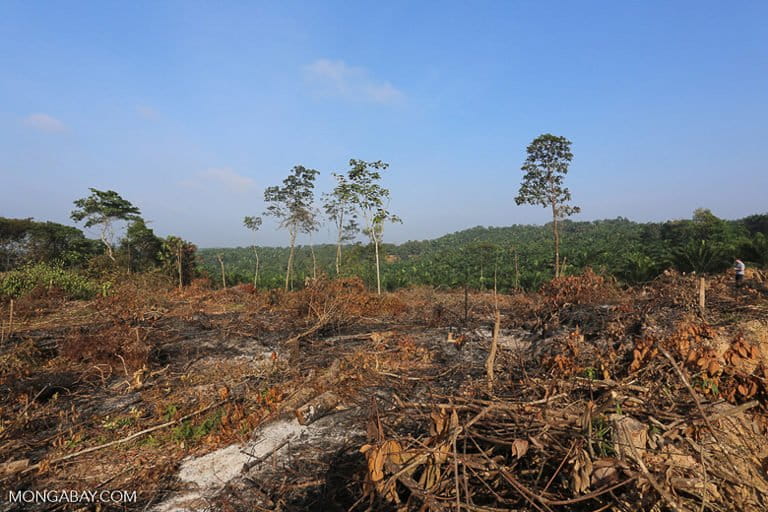
Meanwhile, the abuse of Forest Clearing Authorities by privately owned Malaysian logging companies has flourished. Over the past three-years, one-third of all log exports have come from FCA areas, with 50 such licences issued, the largest covering more than 250,000 hectares.
The UN says it is concerned these FCAs have been issued without the informed consent of local resource owners and the permits are being unlawfully used as cover for the logging of large-areas of forest in breach of Forestry Act rules.
The letter also raises the lack of public information about the Forest Authority’s promised audit of all FCA logging operations and the implementation of a moratorium on new FCA projects.
The UN says the delays in the cancellation of SABL leases and abuse of FCAs threaten the rights of Indigenous Peoples, particularly their right to own, develop, control and use their communal lands and resources and their rights to justice, effective remedies and fair and just compensation.
The Committee has asked the government to provide a response on all the issues raised in its letter by 17 April 2026. It also notes the government has previous failed to respond to earlier letters sent in 2011, 2016 and 2018 that raised similar issues.
Later this year it will be the turn of the PNG government to appear before the United National Human Rights Council in Geneva to defend its record on human rights under the five-yearly Universal Periodic Review process.
The issue of SABL leases and abuse of FCA logging licences are likely too feature heavily in those hearings.
We are enlightened by the forest canopy, and so we take the announcement by the Papua New Guinea Forest Authority to ban round log exports this year with great unease.
Why? Because we have heard this before. We heard it from Prime Minister James Marape last year. We heard it from others even before James Marape declared a total ban on round logs export.
And for a variety of reasons – we don’t know how – the round logs somehow keep floating off and away to Asia, our biggest market.
Logging is the most controversial industry in our country. Foreign loggers employing highly unsustainable logging and unscrupulous practices have decimated large swathes of our pristine forests, creating an environmental disaster.
Vast communities lose their forests. They lose their land, rivers, creeks and identities for no gain at all.
Yet year after year, under past successive governments, millions of cubic metres of logs – many undeclared – leave our shores.
In 1990, former forests minister Karl Stack decided it was time to place a moratorium on round logs going out of the country. Nothing happened.
In 2009, Chief Sir Michael Somare, under his Vision 2050 policy, supported an end to licensing round log exports. Nothing happened.
Last year, Marape said NO MORE round log exports. Nothing happened.
This week, the PNGFA woke up from its slumber, using Biblical texts, to say that round logs will be completely stopped by the end of 2026.
All these stretch the imagination and make our lumber tremble. Deadline after deadline, while loggers chop, cut at a frantic pace.
Now that 2025 is history, let’s explore some of the ideas that Marape promised.
The focus on downstream processing is a nice way of saying ‘enough of stealing our logs’ just like you have been preying on our fish.
Sadly, there are no factories for downstream processing, so how will this belief eventuate into tangible benefits for PNG?
The Government wants to establish another SOE, PNG Diwai, to take 30 per cent of harvested logs for domestic processing. The question is, where does the 70 per cent go?
SEPUTAR CIBUBUR-Rencana Presiden Prabowo Subianto memperluas perkebunan kelapa sawit di Papua demi mengejar swasembada energi menuai peringatan keras dari organisasi lingkungan.
Di tengah ambisi kemandirian energi, Papua dinilai sudah berdiri di tepi jurang daya dukung ekologisnya.
Data Sawit Watch menunjukkan, hingga 2022, luas perkebunan sawit di Papua telah mencapai 290.659 hektare.
Angka itu nyaris menabrak ambang batas ekologis yang dihitung sebesar 290.837 hektare. Artinya, ruang aman yang tersisa tak lebih dari 200 hektare—margin yang terlalu tipis untuk sebuah wilayah dengan keanekaragaman hayati tertinggi di Indonesia.
“Kalau sawit terus dipaksakan, Papua bukan lagi soal pembangunan, tapi soal kerusakan yang disengaja,” kata Direktur Eksekutif Sawit Watch, Rulianto Pramudya.
Ia menilai pendekatan pembangunan berbasis ekspansi sawit di Papua sudah tak relevan dengan kondisi ekologis mutakhir.
Sejumlah pengamat menilai Prabowo tak perlu terjebak romantisme sawit demi swasembada energi. Papua, kata mereka, memiliki potensi energi lain yang jauh lebih ramah lingkungan—mulai dari tenaga air, surya, hingga biomassa berbasis kearifan lokal.
“Kalau tujuan utamanya energi, mengapa harus sawit?” kata peneliti energi terbarukan dari IESR, Fabby Tumiwa. Menurut dia, memaksakan sawit di Papua justru bertentangan dengan komitmen iklim dan perlindungan hutan yang selama ini digaungkan pemerintah.
Bagi para pegiat lingkungan, pilihan kini ada di tangan Prabowo: melanjutkan ekspansi sawit yang berisiko tinggi atau menyusun ulang strategi energi dengan menghormati batas ekologis Papua. Sebab, ketika batas itu dilampaui, ongkos sosial dan ekologisnya akan jauh lebih mahal daripada manfaat ekonominya.
Sawit dan Risiko Kerusakan Permanen Melampaui batas daya dukung lingkungan berarti membuka pintu pada kerusakan yang sulit dipulihkan. Hilangnya tutupan hutan, rusaknya tanah gambut, meningkatnya emisi karbon, hingga punahnya spesies endemik Papua menjadi risiko nyata. Bagi LSM lingkungan, sawit di Papua bukan lagi isu potensi, melainkan ancaman.
Papua selama ini dipromosikan sebagai “ruang kosong” bagi proyek-proyek besar. Narasi itu dianggap menyesatkan. “Yang disebut kosong itu adalah ruang hidup masyarakat adat,” ujar Kepala Kampanye Hutan Greenpeace Indonesia, Kiki Taufik. Menurut dia, hutan Papua menopang sistem pangan, budaya, dan identitas sosial yang tak bisa digantikan oleh logika perkebunan monokultur. Masyarakat Adat Terpinggirkan Ekspansi sawit di Papua kerap berlangsung tanpa persetujuan bebas, didahului, dan diinformasikan (FPIC) yang layak.
Banyak komunitas adat mengaku baru mengetahui wilayah ulayatnya masuk konsesi setelah alat berat datang. Konflik lahan pun berulang, dari Sorong hingga Boven Digoel. Antropolog Universitas Cenderawasih, Agus Sumule, menyebut pendekatan pembangunan berbasis sawit mengabaikan realitas sosial Papua. “Masyarakat adat Papua punya sistem kelola hutan yang lestari ratusan tahun. Ketika sawit masuk, yang rusak bukan cuma lingkungan, tapi tatanan sosial,” ujarnya.***
The Marind people of West Papua deploy mourning not only to grieve their animal and plant kin but as political resistance
by Sophie Chao + BIO
One torrid afternoon, I journeyed with an Indigenous Marind woman and her family to a patch of razed forest at the edge of the plantation frontier, where workers had cleared the way for oil palm trees. Her name was Circia*. A mother of three in her late 50s, Circia was imposing, but her footsteps were gentle, almost silent when she led us across the wet soils of Merauke, a district in the Indonesian-controlled western half of New Guinea known as West Papua. The patch of former forest that we travelled toward that hot afternoon in May 2016 was a sacred site that belonged to her clan, forming part of the customary territory of the Marind peoples, which today number around 600 families. Though the Marind rely directly on the forest for their everyday livelihoods and subsistence, Circia had not journeyed here with her three children and nine grandchildren to forage or hunt. They had come to mourn.
Towering piles of felled trees surrounded us, ripped from the soil days earlier to make way for a 50,000-hectare oil palm plantation. Among and between the trees lay the bodies of plants and animals who had once inhabited this sacred place. The air was stiflingly hot and still. It was quiet, too, until a distant chainsaw ripped to life. Somewhere in the remaining patches of forest, plantation workers were clearing the way for more oil palm.
I visited Merauke between 2011 and 2019 while doing long-term ethnographic fieldwork with the Marind. I came to learn how they understood the spread of oil palm in their home of West Papua, which has been under Indonesian rule since the 1960s. But during the 18 months that I lived with Marind communities along the upper banks of the Bian River, Circia and her kin taught me something else: the arts of mourning. This was not only a mourning for people, but for trees, animals and ecosystems.
In our age of planetary unravelling, mourning has become a crucial disposition. It is one that allows us to acknowledge and grieve loss, but also to create or revive connections with more-than-human others. In that way, mourning becomes a form of resistance that pushes against human exceptionalism. It reminds us that we share the world with many other kinds of beings, and that these beings also have their own ways of grieving. But the space shared with other species is complicated. We are not just together in the same world, we are tangled up in each other’s lives. Other species live on and in us, they change us, and we change them, too: we breed them, farm them, mutate their genomes, eat them, research them, love them, and kill them. Increasingly, human action is leading to their extinction. Should we not mourn them, too? Acknowledging the relations that sustain or undermine life and death in multispecies worlds means also learning to practise ‘multispecies mourning’.
Cassowary feathers salvaged from an oil palm concession by Marind villagers. Photo by Vembri Waluyas
For Circia and the Marind, multispecies mourning can mobilise pain and grief, especially the grief that comes from witnessing profound ecological changes. But it’s not just a form of commemoration and remembering. Mourning resists the trivialisation of lives that aren’t human and the regimes of violence that make more-than-human deaths seem normal or natural. Mourning the deaths of plants, animals and landscapes, as the Marind do, demands that we rethink which deaths deserve grief, which deaths are morally sanctioned, and which are forgotten altogether. It invites us to consider how we might remember those who must die for us to thrive. But how exactly do you mourn a forest?
West Papua lost 748,640 hectares (1.85 million acres), or 2% of its old-growth forest, between 2001 and 2019, according to the study published in the journal Biological Conservation. This was largely due to the growth of plantations, primarily oil palms, and the government’s push for infrastructure development in the region. Oil palm and pulpwood plantations accounted for 208,223 hectares (514,500 acres) of the deforestation during those periods, or 28% of total deforestation. A study, by the Indonesian Forum for the Environment (WALHI) Wahana Lingkungan Hidup Indonesia, an NGO, attributes 22,009 hectares (54,400 acres) of forest loss between 2001 and 2019 due to the construction of Trans-Papua Highway. The Road passes nearby at least seven conservation zones, including Lorentz National Park, a UNESCO World Heritage Site, causing the loss of the function of protected areas as the support system of their surrounding ecosystems. It notes that 22% of this deforestation in an area of 4,906 hectares (12,100 acres), occurred in protected conservation zones. According to spatial analysis by the NGO Auriga Nusantara, Lorentz lost 7,644 hectares (18,888 acres) of forests in the past two decades, with an increasing deforestation rate.
A 202-km (126-mi) stretch of the highway that’s built through the national park has devastated parts of the protected area. Among the species living in the national park is the endangered dingiso tree-kangaroo (Dendrolagus mbaiso).
In July 2021, the UNESCO World Heritage Committee meeting in Fuzhou, China urged the Indonesian government to shut down constructing the Trans Papua Road in West Papua. The call released after the organisation highlighted the highway construction damaged the flora and fauna ecosystem in Lorentz National Park. Extraction industries, particularly palm oil plantations and mining projects remain a major threat to indigenous peoples and the ecosystem in West Papua.
The environmental destruction has occurred through the economic interests of both Indonesia and foreign companies. Besides losing natives land, the presence of these companies are causing negative outcomes, such as flooding and landslides. Many Papuans are threatened with huge tracts of land that have been granted as concession to timber companies. These companies were established in the early 1980s, and increased rapidly in palm oil production sites during the recent years, which is now considered a major cause of deforestation, and linked to the human rights concern affecting indigenous Papuans living nearby plantations.
The presence of these companies remains the biggest threat to primary rainforests in West Papua, and thus to West Papua’s ability to thrive and continue their culture and way of life, that is to determine their own destiny. As mentioned previously, destroying a people’s physical environment is a form of at least cultural genocide and carries a very real threat of physical genocide as well.
Recently discovered bird-of-paradise. Photo Credit: Tim Laman, Birds of Paradise Project
The vast forests of the world’s largest tropical island are populated by exotic birds of paradise, kingfishers, parrots, raptors and pigeons – these species representing just a handful of almost 750 that have so far been identified.
Yet New Guinea – notable for unique and biodiverse flora and fauna attributed to its turbulent geological history and range of tropical habitats from sea level to high elevation mountain ranges – faces multiple threats from deforestation.
Since colonial times, the island has been divided – in the west, the provinces of West Papua and Papua make up Indonesian New Guinea, and in the east it is the independent country of Papua New Guinea. Until relatively recent times, the environmental disruptions faced by Indigenous Peoples and local communities were mostly localized.
But since 2010, the situation has been rapidly changing, according to David Gaveau, a member of the International Union for Conservation of Nature Oil Palm Task Force, who worked with a team of Indonesian and international scientists to use satellite imagery to measure forest loss between 2001 and 2019, demonstrating close ties between expansion of the Trans-Papua Highway – a 4,000 km national investment project – the expansion of oil palm plantations and deforestation.
Forest loss in Indonesian New Guinea: Trends, drivers and outlook
“Positive correlations between Trans-Papua Highway construction and plantation expansion indicate these are linked processes,” said Gaveau. “Plantations and roads expanded rapidly after 2011, particularly in Papua province. While overall forest losses remain limited, our model shows how new roads may lead to more extensive deforestation. Some 4.5 million hectares of forest will be cleared by 2036 if Papua and West Papua follow similar patterns observed in Kalimantan on the island of Borneo.”
With less land available elsewhere in the country, agro-industries are increasingly investing in the development of large monoculture plantations for palm oil, and pulp and paper production, he said, adding that extensive road construction supports related land development, as well as mining.
The scientists used satellite data to examine the patterns and relationships of deforestation, road development and plantation expansion from 2001 to 2019, then developed a model to predict future deforestation.
The data are summarized in the journal of Biological Conservation and presented interactively in the Nusantara Atlas.
“We believe that the role of civil society to monitor, alert and report on deforestation and land conversion in Papua and West Papua should be strengthened to ensure what happens on the ground is fair, transparent and democratic,” Gaveau said.
“Although roads can bring benefits to previously remote and neglected communities, many observers are concerned that big commercial interests dominate over local needs across the region,” he added. “They appear to facilitate access by concession owners to their oil palm or mining concessions and benefit their subsequent extractive industries with consequent harm to forests, to Indigenous Peoples and to biodiversity.”
To reach their findings, the scientists calibrated six models using forest loss observed between 2010 and 2018 as the response variable. They generated yearly deforestation risk maps, simulating the spatial occurrence of forest loss over an 18-year time frame to 2036.
Using two scenarios – one which estimated the speed of forest loss as the percentage of forest loss observed between 2010 and 2018 in Indonesian New Guinea, relative to the total amount of forest left. The other scenario estimated forest loss as the percentage of forest loss based on what was observed in Indonesian Borneo between 2001 and 2018.
Aerial view over highway cutting through rainforest in Papua Province. Photo credit: Ulet Ifansasti for Greenpeace
“Although our research focused on land-cover change, this is only one aspect of the threats to biodiversity in the area,” said co-author Douglas Sheil, who is also a member of the IUCN task force, which investigates the sustainability of palm oil, and a professor at Wageningen University & Research in the Netherlands.
“New roads do not only increase the risk of deforestation, but they also increase access for other activities such as hunting, potentially impacting wildlife,” he added. “But what I would emphasize — as particularly important and exciting in Indonesian New Guinea — is how the aspirations of local communities and conservation often align. In many instances people venerate, guard and protect nature as an integral part of their culture. If we work closely with these people we can develop plans that have local support, and bring many wider benefits both in terms of development and conservation. ”
Overall, less forest loss has occurred in Indonesian New Guinea than in the rest of Indonesia, with only 2 percent of old growth forests cleared from 2001 to 2019, mostly due to plantation expansion, roads, timber cutting, fires, shifting agriculture, artisanal mining and landslides, according to the report.
“Policies overseeing land use decisions should carefully weigh the trade-offs in the region and acknowledge the significant local and international role these forests play economically and environmentally,” Gaveau said.
Free West Papua Campaign Nederland / Free West Papua NL / 2 days ago
Newsroom Special Investigation: An Auckland property developer is involved in a company linked to carrying out deforestation in Indonesia, where virgin rainforest is being bulldozed to grow palm oil plantations. Watch Melanie Reid’s video story above.
From above, the satellite image shows two insignificant dark-coloured shapes, like a couple of missing puzzle pieces in a flat sea of green. But on the ground, they represent devastation.
This innocuous picture illustrates the beginning of what is earmarked to become the world’s largest palm oil plantation, replacing one of the last remaining rainforests on earth.
Two years ago, the Tanah Merah megaproject began clearing just 230 hectares in Papua, the Indonesian controlled half of New Guinea (the other half of the island is Papua New Guinea).
That relatively small land area was just a warning of what is predicted to come: 270,000 hectares have been allocated to the project, an area ten times the size of Auckland’s Waitakere Ranges.
After halting work due to alleged non-payment of staff salaries, in March this year the bulldozers arrived again and forest clearing resumed. This can be seen using near-real time satellite imagery on Nusantara-Atlas.org – the newly felled sections of rainforest are in pink.
The project is divided into seven concessions – parcels of land – of around 40,000 hectares each in Boven Digoel, a regency in Papua’s southeast.
Documents obtained by Newsroom show three of those seven concessions are controlled by a company called Digoel Agri Group, whose majority shareholder is listed as a New Zealander.
(Read the full response from Digoel Agri Group here.)
Environmental experts say the Tanah Merah project is a sign of things to come and if this entire forest is razed it will be catastrophic – hundreds of millions of tonnes of carbon will be released, contributing to the world’s failure to stay under two degrees Celsius of warming.
So why, when we face a climate emergency of biblical proportions, is an Auckland property developer involved in the felling of some of the world’s most diverse, intact, old-growth forest?
The Kiwi tree defender
Tanah Merah is just one of a number projects on the island involving dozens of players from around the world, including the Middle East, Korea and Malaysia, who are already turning the varied flora into monocrop forests of palm oil trees.
But a network of individuals and organisations is attempting to shine a spotlight on what’s going on in Papua to prevent what they say is an environmental and human rights calamity.
One of those is Grant Rosoman. Tall, lean and 60 years old, he looks more university professor than tree-hugger, despite dedicating his life to protecting tropical forests and their inhabitants.
Grant Rosoman. Photo: Supplied
In the late 1980s and early 1990s he worked to halt the importation of kwila coming from Indigenous communities in Malaysia, at one point chaining himself to a log at a Christchurch timber yard. His campaigning succeeded.
“We managed to drop imports down to a fifth of what they were and to raise awareness of the issue. Because people had no idea their decking was coming from the destruction of people’s lives and forests. And it’s a bit the same with Papua.”
As a senior adviser to Greenpeace International, he tells Newsroom he is shocked a fellow New Zealander is involved in this – and warns the impact of losing a forest this size during a climate crisis will be catastrophic.
The Rainbow Warrior III sailing on the Boven Digul River in Papua. Photo: Ulet Ifansasti / Greenpeace
“If we lose this forest then we don’t survive climate change. That’s how important it is for everyone.”
He says all New Zealanders should be concerned about what’s going on over there.
“This is the first time I have come across a New Zealander investing in tropical rainforest destruction.”
But, isn’t it a bit rich for someone from Aotearoa New Zealand – a country that has systematically wiped out two thirds of its native forest in favour of naked rolling landscape covered in cows and a tidal wave of urban housing – to pass judgment when another country seeks to make money from its primary resources?
“We in Aotearoa made the mistake of clearing most of our lowland forest and now there are massive very costly national and local programmes to restore the forest that has been lost. We don’t want Papua to make the same mistake, especially for the local customary communities that are so reliant on and spiritually tied to their forests. The local communities are telling us this,” says Rosoman, who adds that they instead support local enterprises that protect the forest but also generate an income, such as sago, medicinal plants and spices, and ecotourism.
“Destroying the forests of Papua for the benefit a few wealthy Indonesian elites or foreign investors like Neville Mahon is not development.”
Destruction of virgin peatland rainforest by the Tanah Merah logging and palm oil project in Papua. The photos show new road networks leading into vast areas of untouched, virgin rainforest, indicating where operations are likely to expand. Photo: Greenpeace
Atlas of destruction
New Guinea’s landscape is extraordinary. Mangroves and peat swamps sit alongside tropical alpine grasslands and lush forests: a recently released study in Nature journal proclaims it as “the most floristically diverse island in the world”, home to more than 13,000 species of plants.
It is the world’s largest tropical island, with 83% of Indonesian New Guinea supporting old-growth forest, and the third largest rainforest after the Amazon and Congo.
But Indonesia, the fourth largest emitter of carbon, carbon dioxide and greenhouse gas emissions and by far the world’s biggest producer of palm oil, is running out of arable land to grow the fruit.
Members of the Indigenous Auyu community in their ancestral forest in Boven Digoel, Papua. Photo: Nanang Sujana for The Gecko Project/Earthsight
The thing about palm forests is they have a shelf life – after 25 to 30 years these vast monocrops begin to fail because the soil no longer holds up.
In the last few decades around 21 million hectares of Indonesian land has been relinquished to plantation companies. To put that in perspective, Aotearoa New Zealand’s landmass totals 26.8 million hectares.
Used in everything from biscuits and shampoo to biofuel and supplementary feed for Kiwi cows, palm oil made the Southeast Asian country $23 billion last year – and Papua is Indonesia’s final frontier for this moneymaker.
After laying waste to millions of hectares of primary forest in Borneo and Sumatra, this island is the last remaining opportunity to exploit the primary forest for timber and to grow colossal tracts of palm oil monocrops to feed the demand for the ubiquitous product.
Deforestation accounts for the bulk of Indonesia’s CO2 emissions, and this month Indonesia cancelled an agreement it had with Norway to halt deforestation in exchange for hundreds of millions of dollars in environmental protection incentives.
Full article here: https://www.newsroom.co.nz/dreams-dollars-and-destruction-of-a-rainforest
The post Investigations: Kiwi’s links to threat to crucial rainforest in West Papua first appeared on Free West Papua Campaign Nederland.
Papua New Guinea's prime minister James Marape is to raise climate change and the threat to his country's biodiversity at the UN.
Marape has arrived in New York to speak at the United Nations General Assembly for the first time on Friday, when the prime minister said he would also speak on behalf of small island states.
Villagers have resorted to using tires and barrels for protection from the sea Photo: RNZ Pacific / Koro Vaka'uta
Marape said he hoped industrialised countries will help PNG to conserve its great biodiversity by mitigating the threat climate change poses.
He suggests that global climate fund institutions who repeatedly tell PNG to preserve its native forests should in exchange finance basic services in his country.\
Marape pointed out that although PNG has a large land mass, it has close to 600 outlying islands and was qualified to speak about climate change.
"We were the first country in the world to relocate climate change refigees, from the Carteret Islands.
"Papua New Guinea, including the 15 other smaller Island States in the Pacific, do not emit a lot of carbon into the atmosphere and yet they are paying the price," he said.
"Relocating the people of Kiribati, who are slowly losing their land to sea water to another land mass that is not a part of their own country is a plan that they are against as well.
"Their island is sinking but the people have chosen to stay. The world must do something. We should also cite the Caterets as well."
NG Prime Minister, James Marape (right) had a meeting with the UK's Alok Sharma, UNFCCC COP26 President Designate. New York, 21 September, 2021. Photo: PNG PM Media
"Since the Kyoto Agreement and now the Paris Accord, industrialised countries have never tried to push hard to implement the agendas agreed to in the agreements."
Marape is urging industrialised nations, to do more and to work together with communities affected by deforestation and climate change "to find a viable and sustainable way forward to achieve the SDG's as well as the Paris Accord, without compromising the development aspirations of developing country, especially the smaller Island States".
"Papua New Guinea has one of the last standing rainforests in the world and if you want me to conserve it, create an opportunity for my people and country to grow without affecting the conservation of the rainforest.
Landowners walking along a logging road in an illegally logged forest, Metamin area, New Hanover, PNG. Photo: Global Witness Media Hub
PNG has struggled to contain illegal logging over recent decades, but the government is seeking more benefits from licensed logging, with Marape recently telling foreign logging companies to start downstream processing activities in PNG or leave the country.
"Our rainforest is the oxygen factory of the world, therefore, it is a global asset. To conserve, we must all work together to find a balance that will preserve the rainforest while improving livelihood."
According to the PNG government, data taken from the Global Forest Watch Forest Monitoring programme has revealed that only 36 percent of earth's 14.6 million square kilometres of tropical rainforest remain intact.
The balance of 64 per cent is either degraded or completely gone.
Community leaders and people from west Santo have united in a protest to protect their forests against a logging and road construction proposal by the Vanuatu Forest Industry Limited, a Chinese-funded company.
They expressed strong disagreement to the proposal through a campaign led by the Santo Sunset Environment Network (SSEN), an indigenous environment Non-Government Organisation (NGO) set up to protect West Coast Santo Mountain Chain, home to Vanuatu’s largest biodiversity hotspot.
“We do not need a logging company that will destroy our place and biodiversity,” the Chairman of SSEN, Allan Taman, said in a video posted on SSEN Facebook Page.
“This logging proposal must be stopped. It will destroy natural habits in our environment. Some of our trees will disappeared and our future generation would not be able to know them, said Daniel Saul, a chief from Vasalea village.
“We have seen logging impacts on the environment in other places. Our rivers will dry up if we cut down our trees. I don’t accept the company coming to our area,” said SSEN’s Coordinator, Benua Jamu.
“Our community will suffer if we allow logging to happen. I don’t agree to logging,” said Tarsolui Richard from Tanokovo village.
“As a youth, I’m not happy about this proposal. Logging will affect my future,” said Yannick Benua from Elia village.
“I don’t want any logging activities happening in my community. We have a conservation area, I don’t want to see us selling our land, accepting logging or even mining,” Barex Laban from Wusi village stressed.
Chief Lency Rovo from the Jarai Alo Kolo Council of Chiefs said: “We have our custom sites which we want to preserve and not destroy. I and other member chiefs do not agree to the company coming over.”
According to a statement from SSEN, a contract prepared by Vanuatu Forest Industry Limited leaked to SSEN, represents a serious threat to indigenous land stewards as the rightful owners of natural resources.
“The contract gives the logging company ownership of all the timber and is free to use for any purpose... can dispose of them at will and can...profit from disposal proceeds.
“It was circulated amongst local chiefs by a paid agent of the company, without telling landowners that the road they have proposed to build comes as the price of their timber.
“Elsewhere in the Pacific, logging companies have offered to build roads in exchange for timber and have devastated vast areas of land in the exploitation of resources.”
The Daily Post approached the Department of Forestry on Thursday this week to seek response from the Director Rexon Viranamaga on the concerns from the locals and mainly the licensing of the company but he declined.
He told the receptionist to convey that he would not be available for comment yesterday also.
Spokesperson of the company said they got approval from the ministry responsible for the proposal and Sanma Provincial Council is also aware of it.
The company will connect all villages in west coast Santo through the proposed road, which is the main component of the proposal, he said.
He added that they are yet to finalise the operation plan and carry out consultation with land landowners and communities.
Curbing deforestation associated with the palm oil industry is crucial if Indonesia wants to meet its long-term emissions reduction targets, experts say.
There are still 3.5 million hectares (8.65 million acres) of natural forest inside existing oil palm concessions that could potentially be cleared in as little as three years as demand for palm oil continues to grow.
Experts have called on the government to save these forests by extending and strengthening a moratorium on licensing new plantations.
They also call for the adoption of the high conservation value and high carbon stock approaches to identifying areas to protect.
JAKARTA — Indonesia could lose an area of tropical rainforest bigger than Belgium to oil palm plantations over the next three years without existing measures to slow this loss, activists warn. This would negate the government’s own commitment to achieve net-zero carbon emissions by 2070.
Indonesia has since 2018 banned the issuance of permits for new oil palm plantations to stem deforestation associated with palm oil production. But existing concessions containing vast swaths of forest may still be cleared. These amount to 3.5 million hectares (8.65 million acres) of forest — and they could be cleared within just three years, according to Anggalia Putri, forest and climate program director at the environmental NGO Madani.
She notes that companies are required to develop their concessions within three years or risk having the land deemed as “abandoned,” seized by the state and given to another firm under existing regulations.
“So oil palm trees have to be planted and the natural forests [in the concessions] will disappear,” Anggalia told Mongabay.
Besides that, the government’s biodiesel program, which seeks to phase out fossil fuel diesel for a blend that contains palm oil-derived fuel, also threatens deforestation, she added. Indonesia’s biodiesel transition program, the world’s most ambitious, will require 15 million hectares (37 million acres) — an area a fifth the size of Borneo — of new oil palm plantations, according to the government.
While it’s not clear whether the new plantations will be established in already deforested areas, the program nevertheless adds further pressure to clear natural forests inside existing oil palm concessions, Anggalia said.
“Various studies show that if the demand for biofuel increases overtime, we will run out of crude palm oil by 2023 or 2024,” she said. “And of course that’s an immense pressure for our natural forests and peatland. If we clear all natural forests [inside concessions] for biofuel [production], we will miss the target” set by Indonesia’s government of turning the country’s tropical forests back into a carbon sink by 2030.
That target is part of a larger goal to achieve net-zero carbon emissions by 2070; both aims have been derided as massively unrealistic by experts and activists.
New oil palm plantation established on peatland outside Palangkaraya, Central Kalimantan, Indonesia. Image by Rhett A. Butler/Mongabay.
No review, no revocation
Most of Indonesia’s remaining primary forests are located in the easternmost region of Papua, made up of the administrative provinces of Papua and West Papua.
In West Papua province, a government review recently identified 383,431 hectares (947,479 acres) — an area two and a half times the size of London — of intact forest that sits inside areas earmarked for oil palm plantations.
While there hasn’t been a similar review in the neighboring, and much larger, Papua province, a new report by Greenpeace shows at least 685,388 hectares (1.69 million acres) of forests inside oil palm concessions. Nearly two-thirds constitutes primary forest and almost a sixth is peatland.
Primary and peat forests are ostensibly protected under the palm oil permit moratorium, but the policy isn’t retroactively applicable for concessions issued before it was passed. And without extra measures to protect these forests, they can be legally cleared for planting oil palms.
Greenpeace estimates that clearing this area of forest in Papua province could release 71.2 million metric tons of carbon — equivalent to almost half of Indonesia’s total emissions in 2018, or half the emissions from the global aviation industry that same year.
Greenpeace says the figure is a conservative one as it doesn’t account for the carbon stored in below-ground biomass such as peat. That makes preserving these forests a crucial part of achieving any kind of long-term carbon sink or net-zero goals, according to Greenpeace forest campaigner Arie Rompas.
“If this is done immediately by revoking existing permits, the Indonesian government could save the carbon remaining in Papua’s concessions,” he said. “If it’s not done, of course the 2070 net-zero emissions target won’t be achieved.”
Deforestation in the Arfak mountains in West Papua province, Indonesia. Image by Rhett A. Butler/Mongabay.
Weak policies
Experts say there have already policies in place that could potentially prevent these forests from being cleared. But they’re either not strong enough or aren’t being strictly implemented.
The 2018 oil palm permit moratorium is itself a case in point. In addition to halting the issuance of licenses for new plantations, it also calls for a sweeping review of existing licenses. But according to Greenpeace, not a single permit has been revoked as part of this process, even though many were issued in apparent violation of prevailing laws and regulations.
And even if a concession is found to be illegal, there’s no default mechanism to redesignate the land as forest, allowing local governments to easily parcel the land back out to another company under a new permit.
The Ministry of Environment and Forestry says it’s addressing this issue.
“We’re currently discussing a ministerial regulation on how to revoke permits that have already been issued,” Ruandha Agung Sugardiman, the ministry’s acting chief of planning, said at a March 22 press conference. “The point is we protect our primary forests so that our national target of reducing emissions by curbing deforestation [can be met].”
Compounding the lack of permit reviews is the fact that the moratorium expires in September this year. Without an extension, the previously unbridled issuance of palm oil licenses will resume, which would put even greater pressure on natural forests, according to Jasmine Puteri, the Indonesia program advisor at the NGO Rainforest Foundation Norway (RFN).
Trias Fetra, a palm oil management program officer at Madani, said extending the moratorium alone is not enough. The government also needs to strengthen it by including a stipulation that explicitly bans clearing natural forests and peatland inside existing concessions, he added.
“That’s why continuing the oil palm moratorium policy with an element of saving natural forest and increasing the productivity of oil palm plantations is very important in achieving Indonesia’s long-term vision,” Trias said.
Land recently cleared to make way for oil palm in Indonesia. Image by Rhett A. Butler/Mongabay.
High conservation value and high carbon stock
An important aspect of identifying forests to save is by determining which areas have high conservation value (HCV) and/or high carbon stock (HCS), and then designating them as protected from clearing.
In 2020, Environment and Forestry Minister Siti Nurbaya said her office had identified nearly 1.5 million hectares (3.7 million acres) of potential HCV areas within 345 oil palm concessions with a total area of nearly 3.6 million hectares (8.9 million acres).
Rizaldi Boer, director of the Center for Climate Risk and Opportunity Management in Southeast Asia and Pacific at the Bogor Institute of Agriculture (IPB), said the government had started discussing taking the HCV and HCS approach in payment ecosystem services. This would see incentives offered to farmers or landowners in exchange for managing their land to provide ecological service.
“The problem is that the regulation on this matter hasn’t been issued yet,” Rizaldi said.
If the HCV and HCS concepts are applied in identifying areas with high ecosystem services, then large swaths of forest can be saved from deforestation, given that more than 60% of industrial and oil palm plantations have high ecosystem services, Rizaldi added.
“Right now, it’s still voluntary” for landowners to implement the HCV and HCS concept, he said.
Rizaldi cited the Roundtable on Sustainable Palm Oil (RSPO) as an example of certification scheme that requires its members to adopt the HCV and HCS approach. The RSPO, widely considered the gold standard for palm oil sustainability certification, requires plantings after November 2005 to not replace primary forest or areas required for management to maintain HCV forests. In November 2018, the RSPO started requiring its members to conserve HCS forests as well.
“Those who have become RSPO members wouldn’t dare to clear forests inside their concessions. If palm oil plantations that are established after 2005 cause deforestation, [the companies] will have to pay for remediation and penalties,” Rizaldi said.
Indonesia also has its own domestic sustainability certification scheme, called the ISPO. Unlike the RSPO, which is voluntary, the Indonesian government has made the ISPO compliance mandatory for all growers. But while the ISPO states that HCV areas cannot be cleared and HCV identification is required, it doesn’t define the identification procedures clearly and is based on national laws and regulations that don’t recognize the HCV concept and don’t make it mandatory to conduct HCV assessments before clearing a forested area.
The ISPO also hasn’t adopted the HCS approach.
“That’s why I emphasize that this certification policy [ISPO] has to include this element [HCV/HCS] as well, and it’s a mandatory element,” Rizaldi said.
The environment ministry’s Ruandha said the ministry has a high-resolution map showing which concessions have HCV and HCS forests.
“But the ones who determine whether an area is HCV or HCS is the license holder,” he said. “What will the management [of the HCV/HCS area] be like? Will it be managed by the license holder itself, or returned to the government? That’s [determined] case by case.”
Banner image: Oil palm plantations in Malaysia. Image by Rhett A. Butler / Mongabay.