Search This Blog

Total Pageviews

Advertisement

Labels

Showing posts with label Papua New Guinea. Show all posts

Hausman system in Papua New Guinea culture


This photo captures a Hausman in the Highlands of Papua New Guinea, where nearly 100 men gather to sleep and discuss important community matters. The Hausman system is deeply rooted in our culture, serving as a central place for men to come together for various purposes. It is not just a place for physical rest, but a venue for community decision-making, conflict resolution, and the passing down of traditional knowledge. Men in the Hausman would often engage in serious discussions to reach consensus on matters such as land disputes, marriage arrangements, cultural practices, and the overall welfare of the community. There would also be special ceremonies, such as initiation rites for young men, as well as celebrations tied to important milestones, such as harvests or successful hunting expeditions.

The Hausman is a sacred space where elders share wisdom with younger generations, teaching them about cultural traditions, leadership, and survival skills. I was deeply inspired by this ongoing tradition, which has been an integral part of my own heritage as well. The last Hausman I participated in was in 1995, and it holds a special place in my memory. After spending some time away at school, I returned in 2005, and to my surprise, the traditional Hausman site had been replaced by a video Haus. With no Hausman in place, I had to sleep in the Haus Meri, which marked the beginning of a new era, one that felt different from the old ways.

Now, looking back at this change, I am motivated to think about how I can revive the tradition of the Hausman. It’s a part of my cultural identity that I feel deserves to be passed down, ensuring that future generations can experience the sense of community and shared purpose that these gatherings provided. The Hausman system is not just about the physical structure, but about preserving the communal values, mutual respect, and social unity that have long been foundational to Yuri culture.

Source: FB Page

This Note was writen by Someone from Yuri-Alaiku tribe, Chimbu, PNG

The Yuri-Alaiku tribe is an indigenous community located in the Gumine District of Simbu (Chimbu) Province, Papua New Guinea. Comprising multiple clans and sub-clans living near the Mon and Maril rivers, the tribe is well-known for organizing community-led peacebuilding and development initiatives.

Location and Geography

  • Inhabits the northwest area of Gumine District, roughly 50 kilometers south of Kundiawa.
  • Settled along the Mon and Maril river corridors between Mount Digine and Mount Wikauma.
  • Region features rugged, misty mountain terrain, ridges, and traditional rural settlements near Omdara village.

Society and Peace building

  • Comprises around 14 clans and numerous sub-clans.
  • Formed the Yuri Alaiku Kuikane Association (YAKA) to drive peace, end tribal conflict, and promote education and community rebuilding.
  • Engages in cultural preservation and contemporary art projects, with members like artist Yuriyal Eric Bridgeman showcasing their heritage locally and internationally.


Mundiya Kepanga: The Huli Chief Carrying Papua New Guinea’s Forest Story to the World


Port Moresby| 4 June 2026: Among the most internationally recognised Indigenous voices from Papua New Guinea is Mundiya Kepanga, a customary chief of the Huli people from the Highlands region whose work has linked traditional knowledge, environmental protection, cultural preservation and international dialogue.
Born in the Tari region of present-day Hela Province, Kepanga belongs to the Huli people, one of Papua New Guinea's largest Indigenous groups. The Huli are renowned across the Highlands for their ceremonial wigs, bird-of-paradise adornments, oral traditions and deep connection to the forests and mountains of their ancestral lands.
For more than two decades, Kepanga has travelled extensively across Europe, North America and other regions, speaking in museums, universities, schools and international forums. His presentations draw upon Huli traditions and experiences growing up in Papua New Guinea's rainforest environment. Through these engagements he has become one of the country's most visible cultural ambassadors.
His international profile emerged through a long collaboration with French photographer and filmmaker Marc Dozier. Their work introduced audiences overseas to Huli culture and life in Papua New Guinea. One of the best-known productions, The Reversed Exploration, turned the traditional explorer narrative on its head by following Papuan visitors as they observed and interpreted life in Europe. The documentary was broadcast internationally, including on National Geographic and Canal+.
Over time, Kepanga became increasingly associated with environmental advocacy. His message centres on the relationship between people and forests, drawing from Huli teachings which view the natural environment as inseparable from community life, identity and survival. In speeches delivered around the world, he has described forests as living systems carrying the memory, history and future of Indigenous communities.
His environmental work gained international attention through the award-winning documentary Frères des Arbres (Brothers of the Trees) and its successor Guardians of the Forest: Time for Solutions. The films follow his efforts to raise awareness about the destruction of tropical forests in Papua New Guinea and the significance of Indigenous stewardship. The productions received numerous international awards and brought his message to audiences across Europe and beyond.
Kepanga has also participated in major international gatherings dealing with environmental and Indigenous issues. He contributed to events linked to the Paris climate conference (COP21), appeared at UNESCO forums, and has spoken alongside scientists, educators and Indigenous leaders from other parts of the world. His presentations combine storytelling, humour and traditional knowledge rather than technical policy language, making them accessible to a wide range of audiences.
An equally important part of his work involves cultural preservation. Kepanga has donated complete sets of traditional Huli ceremonial regalia to several museums in Europe, including institutions in France and Switzerland. These collections provide international audiences with an opportunity to learn about Papua New Guinea's cultural heritage through authentic artefacts created by Huli communities.
His influence extends into literature and education. He has authored and co-authored books, contributed to academic publications and inspired children's literature introducing younger generations to Indigenous perspectives from Papua New Guinea. His life story has become the subject of documentaries, educational programmes and public exhibitions.
In 2026, Kepanga's profile received renewed attention in France through activities connected to the exhibition Plumes du Paradis ("Feathers of Paradise") at the Musée du Quai Branly, Jacques Chirac in Paris. The exhibition explores the history, symbolism and global journey of birds-of-paradise, creatures deeply woven into the cultures of New Guinea. Related events included screenings of Guardians of the Forest: Time for Solutions, with Kepanga participating in public discussions.
Today, Mundiya Kepanga occupies a unique place among contemporary Indigenous leaders. He remains rooted in Huli traditions while engaging audiences across continents. His work has helped introduce millions of people to Papua New Guinea's forests, cultures and Indigenous knowledge systems, making him one of the country's most recognised cultural figures on the international stage.
📸 Fondation Prince Albert II de Monaco| Mundiya Kepanga| Marc Dozier
See less

UN COMMITTEE QUESTIONS PNG GOVERNMENT ON SABL LEASES AND ILLEGAL FCA LOGGING

POST- COURIER JANUARY 28 2026

The United Nations is calling for answers from the Papua New Guinea government over its cancellation of controversial SABL leases and the use of Forest Clearing Authorities as cover for illegal large-scale logging operations.

In a public letter sent last week, the UN’s Committee for the Elimination of Racial Discrimination (UNCERD), says it is concerned by reported delays and a lack of transparency in the revoking of Special Agriculture Business Leases and the audit of FCA logging licences.

A national Commission of Inquiry in 2011 found almost all SABL leases issued over customary land were unlawful due to corruption and mismanagement and in June 2014 the National Executive Council endorsed the recommendation the leases should be revoked.

However, since then there has been a complete lack of transparency over which leases have been cancelled and which remain and affected communities have been denied any effective remedies including fair and just compensation for land and resources illegally occupied or damaged.

Meanwhile, the abuse of Forest Clearing Authorities by privately owned Malaysian logging companies has flourished. Over the past three-years, one-third of all log exports have come from FCA areas, with 50 such licences issued, the largest covering more than 250,000 hectares.

The UN says it is concerned these FCAs have been issued without the informed consent of local resource owners and the permits are being unlawfully used as cover for the logging of large-areas of forest in breach of Forestry Act rules.

The letter also raises the lack of public information about the Forest Authority’s promised audit of all FCA logging operations and the implementation of a moratorium on new FCA projects.

The UN says the delays in the cancellation of SABL leases and abuse of FCAs threaten the rights of Indigenous Peoples, particularly their right to own, develop, control and use their communal lands and resources and their rights to justice, effective remedies and fair and just compensation.

The Committee has asked the government to provide a response on all the issues raised in its letter by 17 April 2026. It also notes the government has previous failed to respond to earlier letters sent in 2011, 2016 and 2018 that raised similar issues.

Later this year it will be the turn of the PNG government to appear before the United National Human Rights Council in Geneva to defend its record on human rights under the five-yearly Universal Periodic Review process. 

The issue of SABL leases and abuse of FCA logging licences are likely too feature heavily in those hearings.

Link- https://actnowpng.org/blog/un-questions-png-government-on-sabl-leases-and-illegal-fca-logging

The Special Parliamentary Committee on Customary Land and Land Reforms

By WANPIS AKO |PNG SUN|

#pngsun #news The Special Parliamentary Committee on Customary Land and Land Reforms is considering to formalise the country’s customary land ownership system as part of a nationwide reform agenda, according to its Chairman, Keith Iduhu.

Mr Iduhu said the committee’s work over the past two years has focused on recognising and strengthening indigenous forms of land ownership, in line with the spirit of the United Nations Declaration on the Rights of Indigenous Peoples. 

He was speaking yesterday (Thursday) to PNG SUN after the opening of the High-Level Seminar on Customary Land and Human Rights taking place at the APEC Haus in Port Moresby. 

It is being co-organised by the Special Parliamentary Committee on Customary Land and Land Reforms and, the United Nations in PNG.

It is themed: “How can human rights standards support inclusive, transparent and accountable customary land reforms and formalisation in PNG?”

The local Hiri-Koiari MP stressed that the reforms are not intended for one district or region, but are designed as a national solution that will benefit all Papua New Guineans.

He noted that only about 4 to 6 percent of PNG’s land is currently held under state titles or alienated, leaving the vast majority of land undocumented and loosely classified as customary land. 

The committee’s intention, he said, is to formalise this land without taking ownership away from clans.

Under the proposed reforms, he said, two national registries would be created. 

One would register clans and customary land groups, correcting weaknesses in the current Incorporated Land Groups (ILG) system, he said.

The second, he said, would register property interests derived from customary land, such as lease agreements. 

Chairman Iduhu told PNG SUN while clan land itself would remain inalienable and non-bankable, leases created from it could be used for agriculture, urban development and other economic activities.

Mr Iduhu said these reforms could unlock major economic potential, particularly in agriculture and real estate, and reduce reliance on imported food. 

He added that documenting land and property rights would help bring informal economic activity into the formal system, increasing national revenue.

The committee, he said, plans to present its findings to Parliament, with a proposed bill expected to be introduced as early as March.

STILL NO DECISIVE BAN ON ROUND LOG EXPORT

Post Courier | Editorial

We are enlightened by the forest canopy, and so we take the announcement by the Papua New Guinea Forest Authority to ban round log exports this year with great unease.

Why? Because we have heard this before. We heard it from Prime Minister James Marape last year. We heard it from others even before James Marape declared a total ban on round logs export.

And for a variety of reasons – we don’t know how – the round logs somehow keep floating off and away to Asia, our biggest market.

Logging is the most controversial industry in our country. Foreign loggers employing highly unsustainable logging and unscrupulous practices have decimated large swathes of our pristine forests, creating an environmental disaster.

Vast communities lose their forests. They lose their land, rivers, creeks and identities for no gain at all.

Yet year after year, under past successive governments, millions of cubic metres of logs – many undeclared – leave our shores.

In 1990, former forests minister Karl Stack decided it was time to place a moratorium on round logs going out of the country. Nothing happened.

In 2009, Chief Sir Michael Somare, under his Vision 2050 policy, supported an end to licensing round log exports. Nothing happened.

Last year, Marape said NO MORE round log exports. Nothing happened.

This week, the PNGFA woke up from its slumber, using Biblical texts, to say that round logs will be completely stopped by the end of 2026.

All these stretch the imagination and make our lumber tremble. Deadline after deadline, while loggers chop, cut at a frantic pace.

Now that 2025 is history, let’s explore some of the ideas that Marape promised.

The focus on downstream processing is a nice way of saying ‘enough of stealing our logs’ just like you have been preying on our fish.

Sadly, there are no factories for downstream processing, so how will this belief eventuate into tangible benefits for PNG? 

The Government wants to establish another SOE, PNG Diwai, to take 30 per cent of harvested logs for domestic processing. The question is, where does the 70 per cent go?

Link: https://actnowpng.org/blog/still-no-decisive-ban-on-round-log-export

PNG PM Marape rejects deep-sea mining even as provincial authorities try to revive project


  • Papua New Guinea’s prime minister, James Marape, opposes deep-sea mining in Papua New Guinea, according to comments made at the United Nations Ocean Conference and directly to Mongabay.
  • Contradicting his position, however, is the governor of PNG’s New Ireland province, Walter Schnaubelt, who has vocally supported mining the Solwara 1 project and reportedly met with company and national government officials about extracting copper and gold from the seabed.
  • From early on, the project has faced opposition from coastal communities living near the Solwara 1 site who are concerned about the impacts of mining on seafloor ecosystems and the fisheries on which they rely. In February 2025, they formally requested a forum to voice their grievances and hear responses from the companies involved, but have yet to receive a response, they say.
  • The company originally awarded the mining license went bankrupt in 2019, and other companies have since tried to resuscitate the project, but without consulting communities or informing them of the risks associated with deep-sea mining, according to the communities. In July 2024, the companies carried out trial mining; government officials say they were unaware of the ship’s presence, but internal documents and emails suggest that key leaders were likely aware that trial mining was planned as early as 2022.

This story was supported by the Pulitzer Center’s Ocean Reporting Network, where Elizabeth Claire Alberts is a fellow.

Papua New Guinean Prime Minister James Marape. Image by Chuck Kennedy/U.S.
Department of State via 
Flickr (Public domain).

NICE, France — James Marape, the prime minister of Papua New Guinea, voiced his government’s rejection of seabed mining at the 2025 United Nations Ocean Conference that took place between June 9 and 13, in Nice, France. His position stands in sharp contrast to the situation unfolding in the country’s New Ireland province, where local authorities are paving the way for foreign companies to begin mining the seabed, despite long-standing, community-led opposition to these developments.

“As a country, we don’t want any deep-sea mining in Papua New Guinea,” Marape told Mongabay in an exclusive interview on the sidelines of the U.N. Ocean Conference (UNOC) on June 10. He said his country would uphold its moratoria against the industry — one of which was announced in 2019, and another in 2023.

The main reason for this position, he said, is that the seas around Papua New Guinea (PNG) are “sensitive and fragile” and are home to important fisheries. “Our waters are very fertile in as far as marine life is concerned,” he said, adding that scientific evidence on how mining might affect marine ecosystems is scant. A recent brief from the U.N. secretary-general’s scientific advisory board warns of “irreversible” potential impacts on sea life due to the destruction of seafloor habitat, sediment plumes and the release of toxins by deep-sea mining.

While Marape publicly asserted his opposition to the nascent industry, a proposed project to dig up copper and gold at a site known as Solwara 1 off the coast of New Ireland province in northeastern PNG appears to be moving ahead after years of dormancy, despite community opposition.

Read More here

NGOs File First-Ever Equator Principles Complaint Over Papua LNG Project

Port Moresby / Melbourne / Tokyo / Paris / London December 14, 2025: A coalition of six civil society organisations from Papua New Guinea, Australia, Asia and Europe has filed the first formal public complaint under the Equator Principles, raising serious concerns about the proposed Papua LNG project and the role of its reported financial backers.

The complaint, submitted on Wednesday, targets Mitsubishi UFJ Financial Group (MUFG), Japan’s largest bank, and any other financial institutions that may be supporting the project, which is led by French energy giant TotalEnergies alongside partners ExxonMobil, Santos and ENEOS.

The Equator Principles are a global risk-management framework adopted by more than 130 financial institutions across 38 countries to assess and manage environmental and social risks in large-scale project financing. While the framework has existed since 2003, this marks the first time a formal, public grievance has been lodged against it.

According to the complainants, the Papua LNG project fails to comply with at least six of the ten Equator Principles. They argue the project poses significant risks to Indigenous communities, biodiversity and the climate, and lacks transparency and accountability.

The upstream gas development is expected to affect at least 12,700 people living in 39 predominantly rural and Indigenous communities in Papua New Guinea’s Gulf Province. The project area is described as one of exceptional ecological importance, with at least 100 species not yet described by external science and more than two dozen threatened terrestrial species.

Among the key concerns outlined in the complaint are an alleged absence of verifiable evidence that affected communities have given their Free, Prior and Informed Consent (FPIC), a lack of publicly available climate and human rights impact assessments, and what the groups describe as severe biodiversity risks.

Peter Bosip, Executive Director of the Centre for Environmental Law and Community Rights in Papua New Guinea, said the complaint reflects deep concern about the project’s implications for local communities.

“The people of Papua New Guinea deserve development that respects Indigenous rights, protects nature and safeguards the climate,” he said. “We are urging the Equator Principles to act.”

The complaint places particular scrutiny on MUFG, which has been reported to be acting as financial adviser to the Papua LNG project and seeking to raise financing, despite being a signatory to the Equator Principles.

Campaign groups argue that MUFG’s involvement contradicts its public commitments on climate action and risk management. They are calling on the bank to withdraw from the project pending a full investigation.

Environmental and finance campaigners also note that resistance to financing the project has been growing. Around one in ten Equator Principles banks have already ruled out involvement in Papua LNG based on internal policies. In 2024, Crédit Agricole stepped down as financial adviser, citing environmental and human rights concerns following sustained civil society pressure.

Major banks in Papua New Guinea, Australia, France and Italy are also reported to have declined to finance the project, including institutions that have historically supported TotalEnergies.

Advocacy groups say the Papua LNG case represents a critical test for the credibility of the Equator Principles themselves. While the framework does not include a formal grievance mechanism, the complaint has been lodged through an online process supported by the Netherlands-based NGO BankTrack.

Critics have long argued that the Equator Principles lack enforcement power. The complainants are urging the Equator Principles Association to investigate the allegations and formally alert all signatory banks.

Campaigners across Asia and the Pacific have also framed the dispute within a broader push for a rapid transition away from fossil fuels, warning that gas projects such as Papua LNG risk locking countries into carbon-intensive development paths.

The Equator Principles Association has not yet publicly responded to the complaint. TotalEnergies and MUFG have also not issued formal statements addressing the allegations raised.

If upheld, the complaint could intensify scrutiny of how global banks apply environmental and social safeguards to large-scale energy projects — particularly in biodiversity-rich and socially sensitive regions such as Papua New Guinea.

𝗣𝗿𝗶𝗺𝗲 𝗠𝗶𝗻𝗶𝘀𝘁𝗲𝗿 𝗠𝗮𝗿𝗮𝗽𝗲 𝗖𝗮𝗹𝗹𝘀 𝗳𝗼𝗿 𝗨𝗿𝗴𝗲𝗻𝘁 𝗚𝗹𝗼𝗯𝗮𝗹 𝗔𝗰𝘁𝗶𝗼𝗻 𝘁𝗼 𝗣𝗿𝗼𝘁𝗲𝗰𝘁 𝗙𝗼𝗿𝗲𝘀𝘁𝘀 𝗮𝗻𝗱 𝗢𝗰𝗲𝗮𝗻𝘀 𝗮𝘁 𝗚𝗖𝗙 𝗕𝗼𝗮𝗿𝗱 𝗠𝗲𝗲𝘁𝗶𝗻𝗴

MEDIA STATEMENT
Port Moresby | Monday, 30 June 2025

Prime Minister Hon. James Marape has issued a powerful call to the international community for urgent and united action to safeguard the world’s forests and oceans—describing them as the “lungs and lifeline of our planet.”

Speaking during his keynote address at the 42nd Meeting of the Green Climate Fund (GCF) Board held in Port Moresby, the Prime Minister welcomed global climate leaders to Papua New Guinea and underscored the nation's vital ecological and cultural heritage.

“Our country, with just under half a million square kilometres of land and ocean, holds 6 to 7 percent of the world’s biodiversity,” Prime Minister Marape said. “From the vast rainforests of the Highlands to the pristine coral reefs of our islands, we are custodians of an environmental treasure that belongs not only to us but to all humankind.”

The Prime Minister stressed that preserving these critical ecosystems is not just a national responsibility but a global imperative, urging partners to increase support through climate financing, sustainable development initiatives, and collaborative conservation efforts.

The 42nd GCF Board Meeting, held for the first time in Papua New Guinea, brings together international leaders and stakeholders to deliberate on climate financing strategies aimed at addressing the global climate crisis.

No New Forestry Licences After Sept 16, Says PM Marape

Port Moresby, Tuesday, 01 July 2025– Prime Minister James Marape has announced that no new forestry licences will be issued in Papua New Guinea after September 16, 2025. The move is part of the government’s ongoing efforts to ensure more sustainable and responsible management of the country’s forest resources.

Speaking on the policy shift, Prime Minister Marape urged current operators in the forestry sector to pivot towards downstream processing and value-added industries. He emphasized that the future of PNG’s forestry industry lies in creating more local jobs, enhancing domestic value chains, and maximizing economic returns from timber resources.

“We are drawing a line. After September 16, no new forestry licences will be issued,” Marape said. “We want to encourage industry players to go into downstream processing to ensure more value stays in the country and benefits our people.”

The government says this decision aligns with its broader commitment to protect natural resources, promote sustainability, and encourage inclusive economic development.

PRIME MINISTER MARAPE ATTENDS 3RD UN OCEAN CONFERENCE TO CHAMPION MARINE SOVEREIGNTY AND CLIMATE RESILIENCE


Media Statement ~ 10 June 2025

Prime Minister Hon. James Marape is leading Papua New Guinea’s delegation at the 3rd United Nations Ocean Conference (UNOC3) in Nice, France, reaffirming PNG’s leadership and commitment to protecting ocean ecosystems, advancing sustainable fisheries, and addressing the climate crisis. Prime Minister Marape is expected to speak today.
The ocean is not only a source of biodiversity but the lifeblood of the nation central to identity, food security, and economic development. As an archipelagic and maritime country located in the Coral Triangle, Papua New Guinea possesses 2.8 million square kilometres of marine territory and is home to:
* Over 7 percent of global marine biodiversity,
* One-third of the world’s tuna stocks,
* The fourth-largest coral reef system, and
* Some of the most pristine mangrove ecosystems in the Pacific.
The ocean is central to who we are as a people. It is our cultural identity, our economy, and our food security.
*PNG's Achievements and Commitments*
Since the last Ocean Conference, Papua New Guinea has made significant progress in ocean governance:
* Enacted the Protected Areas Act 2024, with a goal to protect 30% of terrestrial and marine ecosystems by 2030.
* Declared two new Marine Protected Areas (Lovongai and Murat) covering over 17,000 km².
* Developed a National Oceans Policy (2020–2030) and established a National Oceans Office for integrated marine governance.
* Initiated a Blue Carbon Policy, with stock assessments underway across six provinces.
* Formally submitted its marine boundary coordinates under the United Nations Convention on the Law of the Sea (UNCLOS) to reaffirm sovereignty in light of rising sea levels.
* Signed the BBNJ (Biodiversity Beyond National Jurisdiction) Agreement, marking a milestone in protecting marine biodiversity in areas beyond PNG’s national jurisdiction.
*Sustainable Fisheries and Blue Economy*
PNG is promoting sustainable fishing practices through zone-based management and the Vessel Day Scheme, under the Parties to the Nauru Agreement. To combat illegal, unreported and unregulated (IUU) fishing, PNG became a State Party to the Port State Measures Agreement in 2024.
Efforts are also underway to build a blue economy, with investments in Special Economic Zones such as the East New Britain Fisheries Hub, which supports local fish processing, creates coastal livelihoods, and enhances resilience to climate impacts.
Global Climate Leadership
Prime Minister Marape will also use this platform for PNG’s call for international solidarity on climate and oceans with reaffirmation and PNG’s support for:
* The Kunming-Montreal Global Biodiversity Framework,
* REDD+ forest conservation mechanisms,
* A legally binding Plastics Treaty,
* And greater ambition under the Paris Agreement’s 1.5°C target.
This will include a tailored, predictable, and scaled-up climate financing for Small Island Developing States (SIDS), particularly through the Green Climate Fund, which PNG will host for its 42nd Board Meeting later this month. With Prime Minister, Hon James Marape's leadership, PNG is becoming a global voice for environment protection, climate change and sustainable development.

GOVERNOR PARKOP SUPPORTS EUROPEAN UNION GREEN DIPLOMACY WEEK

The European Union Green Diplomacy Week was officially launched yesterday at the Port Moresby Arts Theatre by European Union Ambassador to PNG, His Excellency Jacques Fradin, alongside National Capital District Governor, Hon. Powes Parkop.

This annual global campaign, led by the European Union and its Member States, aims to foster international cooperation on climate change and inspire meaningful action toward environmental sustainability.

His Excellency Jacques Fradin emphasized that the campaign actively engages youth from across Papua New Guinea in panel discussions over two days, focusing on leadership in climate action, biodiversity, forestry, and sustainability.

“These discussions will provide an opportunity for young people to ask critical questions and explore solutions to address biodiversity loss, climate change, and sustainability challenges as our nation faces these pressing issues,” said Ambassador Fradin.

Governor Parkop, a well-known advocate for climate action, expressed gratitude to the European Union for its commitment to addressing global environmental challenges and for supporting PNG’s efforts at both the local and international levels.

“As the leader of our capital city, I have been vocal on climate change not only at the national level but also as part of a global community. I am ready to partner with all our international friends to address the challenges that threaten our planet,” said Governor Parkop.

Papua New Guinea is home to some of the world’s most ecologically significant tropical rainforests, covering over 70% of the nation’s land area. These forests form part of the third-largest contiguous rainforest on Earth, serving as a vital biodiversity hotspot with species unique to PNG.

Governor Parkop stressed the need for partnerships with developed nations to ensure PNG progresses economically while preserving its natural environment.

“As a carbon-neutral nation, we face many challenges in achieving economic growth. However, through collaboration with nations that have advanced technologies and experience, we can develop sustainably without destroying our environment,” he said.

Governor Parkop also called for continued global support to protect PNG’s rainforests, which are not only crucial for our nation’s future but also for the planet’s environmental balance.

“Together, we must safeguard what we have and learn from global best practices to ensure economic progress aligns with environmental protection. This partnership is essential for creating a cleaner, greener, and more resilient Port Moresby and Papua New Guinea,” he added.

The Green Diplomacy Week launch aligns with Governor Parkop’s broader vision of transforming Port Moresby into a sustainable, eco-friendly, and thriving city where development goes hand in hand with environmental stewardship.

PAPUA NEW GUINEA DECLINES TO ATTEND COP29 - A STAND AGAINST GLOBAL INDIFFERENCE

Wednesday 23th October, 2024 Press Release

Foreign Affairs Minister, Hon. Justin Tkatchenko, at the Commonwealth Ministerial Meeting on Small States (CMMSS) in Apia Samoa, on Wednesday, announced that Papua New Guinea will not participate at the 29th United Nations Climate Change Conference of Parties (UNFCCC COP 29) later this year at the political level. 

Papua New Guinea's stance is in defense of forest nations and small island states, against the non-action by nations that are major contributors to the worlds climate crisis.
Minister Tkatchenko emphasized that this decision reflects the broader frustration felt by nations like Papua New Guinea (PNG), who bear the brunt of climate change but see little to no meaningful support from the global community.

"Papua New Guinea is making this stand for the benefit of all small island nations. We will no longer tolerate empty promises and inaction, while our people suffer the devastating consequences of climate change."

Minister Tkatchenko highlighted Papua New Guinea's challenges of rising sea levels, and natural disasters including landslides, floods, and droughts. 
He added that despite contributing little to the global climate crisis, countries like PNG have been left grappling with the severe impacts.

Minister Tkatchenko stressed that Papua New Guinea is taking this stand for the benefit of all small island nations - recognising that there has not been much traction to help small states, particularly Pacific Island small states, who have had much difficulty with access to climate finance over recent years. 
He said that despite making high level representation at the UNFCC COP, nothing concrete has been forthcoming from the major multilateral meetings.

While he noted that the outcome of the CMMSS would prepare commonwealth countries to make collective representation at the forthcoming COP29 in Azerbaijan - to progress the commonwealth efforts on building resilient economies and associated environmental commitments, Minister Tkatchenko told the forum that Papua New Guinea will no longer listen to empty promises.

Minister Tkatchenko condemned the international community for failing to live up to its financial and moral commitments, leaving smaller nations like PNG to fend for themselves in the face of increasingly frequent and severe climate events.

"The pledges made by major polluters amount to nothing more than empty talk. They impose impossible barriers for us to access the crucial funds we need to protect our people. Despite repeated attempts, we have not received a single toea in support to date."

Minister Tkatchenko stressed that Papua New Guinea is one of the third biggest rain forest nations of the world, serving as the major 'lungs' of the world that cleans the carbon dioxide that major greenhouse gas emitters (countries) produce, thus is an integral global lifeline in saving the world and the planet from disaster.

“We need action, not more talk. The last three COP meetings have gone around in circles, producing no tangible results for small island states. COP29 will be no different, so PNG will not participate at the political level recognising the lack of respect for forest nations in the big carbon sink until some progress becomes evident to address the plight of PNG and other small states."

Minister Tkatchenko called attention to the hypocrisy surrounding global climate financing and the disregard for forest nations, which act as critical carbon sinks for the planet.

“The international community has shown a total lack of respect for countries like ours that play a crucial role in mitigating climate change. We are tired of being sidelined.”

Looking ahead, Minister Tkatchenko affirmed that Papua New Guinea would explore independent solutions to protect its people and natural assets, free from the empty promises of the global powers.

“If we must cut down our forests to sustain ourselves and develop our economy, so be it. Papua New Guinea will no longer wait for empty words while our people suffer. We are taking control of our destiny.”

This bold decision underscores Papua New Guinea’s frustration with the international community’s inaction and sends a clear message: forest nations and small island states deserve more than lip service—they deserve real, immediate action.

The Commonwealth comprises 56 countries of which 33 are small states both island and landlocked including 9 Pacific Island countries out of the total 42 Small States in the United Nations.

The CMMSS is convened prior to the Commonwealth Heads of Government Meeting (CHOGM) and provides a platform for Foreign Affairs Ministers to discuss challenges confronting commonwealth small states, including concrete action to strengthen resilience of these countries building on existing global development frameworks for sustainable development.

The 2024 CMMSS focused on members efforts to advance the implementation of the Advocacy Strategy for Small States on: (i) mobilizing concerted action to build resilience to address economic vulnerability; (ii) enhance climate action; and (iii) support small states to build fiscal resilience and improve debt sustainability while amplifying advocacy on access to concessional development finance towards building resilient economies for small states in the Commonwealth.

For Immediate Release

First ever photograph of rare bird species New Britain Goshawk

First ever photograph of rare bird species New Britain Goshawk

The photograph captured in Papua New Guinea is a testament to community and conservation

New Britian Goshawk sits in tree in on New Britain Island, Papua New Guinea© Tom Virius / WWF Papua New Guinea
Date:

September 16, 2024

The rare New Britain Goshawk (Accipiter princeps) has been photographed for the first time in history. The bird of prey is found only on the island of New Britain in Papua New Guinea. The last documented scientific record of the bird is from 1969 and is kept at the American Museum of Natural History in New York.

Tom Vierus, a Fiji-based photographer was on a trip with WWF on the island in March 2024. As local community members led a group through the forest, Vierus took photographs of several bird species. “I wasn’t aware of the significance at the time,” says Vierus. “It was such a great surprise to hear that this photo seems to be the first-ever of this ‘lost species’!”

The sighting and photograph were confirmed by internationally-renowned ornithologists “ While there have been multiple sight-only reports of the bird, the goshawk has not been photographed or recorded in the 55 years since the last specimen was found. Today, the photograph and further details are now available on the websites of Search for Lost Birds and iNaturalist.

A biodiversity hotspot
Papua New Guinea hosts the third-largest intact tropical forest in the world, following the Amazon and Congo basins. It is remarkably diverse in terms of species, landscapes, and ecosystems with more than 5,000 lakes, extensive river systems and wetlands, 5,000 miles of mangrove swamps, lagoons, coral reefs and atolls. The Nakanai Mountains, where the New Britain Goshawk was photographed, are part of a tentative UNESCO World Heritage site and are estimated to be between 10.5-22.5 million years old

Oscar Pileng was born in Pomio in eastern New Britain and is WWF’s officer for the region. After the photo was identified, he spoke with residents in the area, who confirmed that sightings of the bird are rare and usually made in the hinterlands rather than coastal areas. In local languages, the New Britain Goshawk is called ‘keango’ or ‘kulingapa’.”

“I was amazed to hear that this is the first time it has been photographed but am very happy that an official global record now exists, says Pileng. “I hope this means more efforts are made to protect its habitat from the threats of large-scale agriculture, logging, mining and infrastructure development.”

Communities and conservation

The Pomio region is notably home to the Indigenous Mengen and Mamusi peoples, who maintain largely intact traditions and beliefs intrinsically linked to the forests, rivers, and oceans they have called home for millennia. Working closely with these matrilineal clan-based societies, WWF hopes to support local stewardship to safeguard the future of these incredible biodiversity hotspots through community-led conservation.

“There have been very few biodiversity studies in New Britain, and the potential for discovering species new to science is quite high,” says Martha Eimba, Pomio Landscape Manager for WWF-Papua New Guinea. “But it is a race to protect them, with pressures looming large and poverty a reality for many.” WWF collaborates with communities to better understand the threats the region is facing as well as social contexts, and sustainable livelihood opportunities. The goal is to develop a comprehensive program of community-based conservation.

While WWF is actively seeking partners for this important work, the government of Papua New Guinea is in the process of revising its National Biodiversity Strategy and Action Plan ahead of the United Nations Convention on Biological Diversity meeting of the parties, taking place in Colombia in October 2024.

As for the record photograph, “It is wonderful to see how conservation photography can help safeguard areas by documenting the existing biodiversity and a good reminder of how important visual storytelling is,” says photographer Vierus. “I truly hope this mostly pristine part of the world can remain as intact as possible with the help of the local communities, their already existing conservation initiatives and the support of WWF.”

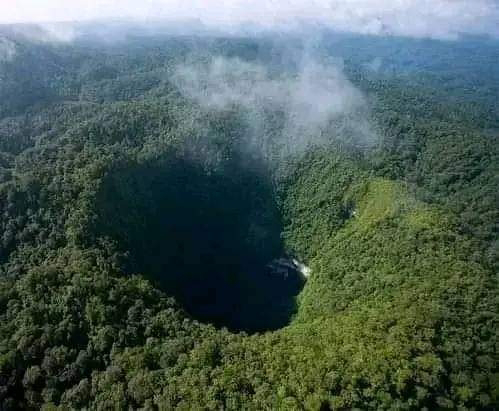
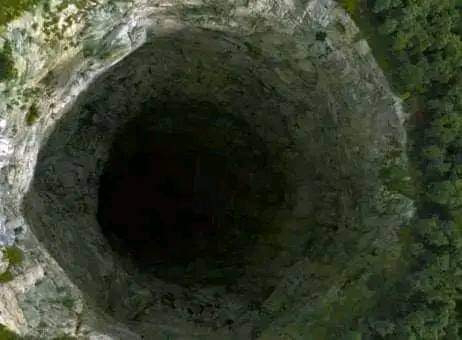
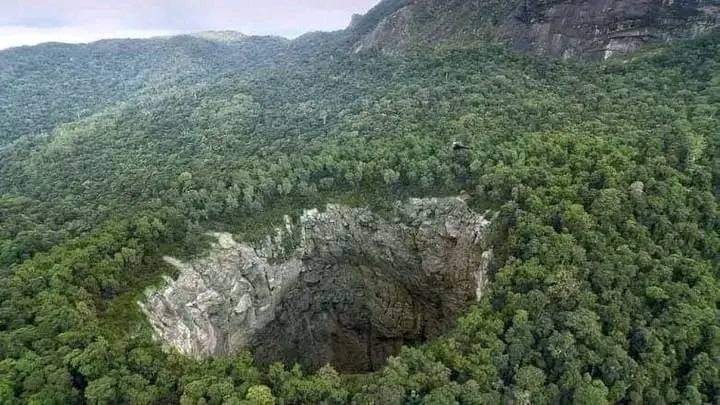
Esa’ala Cave also known as the Mother of all Caves ...

Esa’ala Cave also known as the Mother of all Caves, located in Esa'ala, Milne Bay, Papua New Guinea is one of the most mysterious and least explored caves in the world. Known as the deepest cave globally, it remains 70% unexplored, with its true depth still unknown. In 1998, a team of 13 explorers ventured into the cave, but only one survived the perilous journey. 

The story inspired the movie "Sanctum," which depicts their harrowing experience. This cave also has literary significance, as it was immortalized in Samuel Taylor Coleridge's famous poem "Kubla Khan." 

Picture Courtesy: Anonymous 📷

Source: Namo Parka

#EsaalaCave #PapuaNewGuinea #SanctumMovie #CaveExploration #KublaKhan #Adventure
@@followers@@topfans

Papua New Guinean populations show genetic variation based on environment

May 3, 2024, By Evrim Yazgin

DNA research on Papua New Guinea’s lowlanders and highlanders shows how populations facing unique challenges have distinct genetic adaptations.

New data collected by the Papuan Past project presents whole-genome sequences from highlanders and lowlanders on Papua New Guinea (PNG). The findings are presented in a paper published in Nature Communications.

PNG has a wide range of environments despite being in a tropical region.

Its lowlands are a labyrinth of swamps, lowland forest and tall-grass savannahs. Average maximum temperatures are more than 30°C.

In the highland rainforests, night frost is common above 2,100 metres.

Humans, along with other animal and plant life, have adapted to the different environments and ecologies. But these adaptations are not well understood, and the new research shows how deep they go.

Highlanders have to contend with low oxygen due to altitude. Lowlanders are exposed to pathogens like malaria which are absent in the highlands.

“We explored the signatures of selection in newly sequenced whole genomes of 54 PNG highlanders from Mt Wilhelm (Chimbu Province) and 74 PNG lowlanders from Daru Island (Western Province),” explains project leader and corresponding author Dr François-Xavier Ricaut from the University of Toulouse, France.

“We hypothesised that the genomes of both populations have been shaped differently to mitigate the detrimental effects of their respective environments,” Ricaut adds.

“The genetic variants under selection identified in our study show associations with blood-related phenotypes,” says lead author Dr Mathilde André from Estonia’s University of Tartu.

For example, the authors found a higher red blood cell count in highlanders to help adapt to lower oxygen availability. On the other hand, lowlanders show a higher white blood cell count.

“This supports the idea that hypoxia [low oxygen] might have been the main driving force of selection that has acted on Papua New Guinean highlanders. However, specific pathogens might have shaped the genome of lowlanders through selection,” André adds.

The authors suggest an origin for the lowlanders’ adaptation outside Homo sapiens.

Denisovans are a now extinct ancient human discovered in 2010 who lived in Asia until about 30,000 years ago.

Previous research has shown that up to 4% of Papua New Guineans’ DNA is of Denisovan origin. It has also been established that Denisovan DNA likely helped in the evolution of modern Papuan immune systems.

The new study points to a genetic mutation in Denisova that impacts a specific protein structure.

“It looks like the altered protein is beneficial for the lowlanders to survive in their environment,” says co-lead of the project Dr Mayukh Mondal, also from the University of Tartu. “Although we do not know the exact cause of this selection, this mutation might help the lowlanders overcome malaria.

Papua New Guinea Environmental Alliance letter about the country’s proposed Carbon Market Regulation


CHRIS LANG

APR 12, 2023


In recent months, the Papua New Guinea Environmental Alliance has sent a series of letters to the Climate Change and Development Authority about the development of REDD and carbon market regulation in the country.


The most recent letter was published today (11 April 2023) as a full-page advert in the Post Courier.


Thanks for reading REDD-Monitor! Subscribe to receive new posts and support my work.


In the letter, the Papua New Guinea Environmental Alliance writes that,


“It is our view that a strong regulatory framework will enable us to adequately mitigate the risks that are associated with carbon market project implementation, and in particular guarantee the protection of the rights and interests of customary landholding communities.”


REDD-Monitor has a somewhat different position on regulation, carbon markets, and risks. Rather than attempting to regulate carbon markets, it would be far better to scrap them entirely.


Back in 2009, Larry Lohmann of The Cornerhouse wrote a chapter titled, “Regulation as Corruption in the Carbon Offset Markets: Cowboys and Choirboys United”. It was published in the the book Upsetting the Offset: The Political Economy of Carbon Markets, edited by Steffen Böhm & Siddhartha Dabhi.


Lohmann’s chapter starts as follows:


“When a particular commodity market cannot be regulated, the attempt to regulate it can do no more than create an illusion of regulatability. Deflected into a cul de sac, official action to correct abuses sustains the underlying problems, or makes them worse. Regulatory acts become a danger to society. Governance becomes a part of corruption. All this happens regardless of the good intentions of regulators or anticorruption fighters.”


Lohmann argues that, “the carbon offset market is an example of such an unregulatable market, and that attempts to regulate it will only entrench its status as a locus of international corruption and exploitation”.


Lohmann’s chapter remains extremely topical, 14 years after he wrote it:


“Hundreds of projects and millions of credits are accused of being fraudulent, scams for shoring up business as usual – or worse. Scandal after scandal regarding the offset market is splashed across the front pages of newspapers.”


Some of the members of the PNG Environmental Alliance (including FORCERT and Wildlife Conservation Society) are actively involved in developing REDD projects.


In their letter, the PNG Environmental Alliance is pointing out that developing a regulatory framework for carbon markets “should not bypass thorough consultations with stakeholders and logical, deliberate, and transparent planning and execution of the process”.


Mr. William Lakain

Acting Managing Director

Climate Change and Development Authority

Level 1, Section 72 and 73,

Wards Road, Hohola

P.O. Box 4017,

Boroko 111, NCD


Date: 31 March 2023


Dear Mr. Lakain,


RE: OPEN LETTER ON THE DEVELOPMENT AND IMPLEMENTATION OF A REGULATORY FRAMEWORK FOR CARBON MARKETS IN PAPUA NEW GUINEA


In our letter to your office on 27 February 2023, the members of the PNG Environmental Alliance (PNGEA) outlined the areas that we believe need to be considered and completed for the development of an appropriate regulatory framework for carbon markets in PNG. We received a response from your office on 14 March 2023, however, we now write this open letter to you to ensure our still outstanding concerns related to the development process of the regulatory framework for carbon markets in PNG are made known to the wider public.


In his press statement dated 17 February 2023, the Minister for Environment, Conservation and Climate Change, the Honourable Simo Kilepa, expressed concerns that the absence of a full regulatory framework poses significant risks for governance and transparency for the carbon markets space. We agree with his sentiments to the extent that a full regulatory framework is necessary at this time. It is our view that a strong regulatory framework will enable us to adequately mitigate the risks that are associated with carbon market project implementation, and in particular guarantee the protection of the rights and interests of customary landholding communities. The development of this regulatory framework, however, should not bypass thorough consultations with stakeholders and logical, deliberate, and transparent planning and execution of the process.


The members of the PNGEA have vast combined experiences working directly with rural PNG communities on a range of issues related to sustainable management and conservation of land and natural resources. We believe it is our duty to use this practical experience and expertise at the national level to assist our government in the development of policies, laws and regulations that will serve our people and safeguard their interests.


We are aware that at present, the CCDA is coordinating the drafting of a Climate Change (Management) (Carbon Market) Regulation 2023 (Carbon Market Regulation) and that an amendment of the Climate Change Management Act 2015 (as amended) (CCMA) has been forecasted. We stand ready to provide our assistance where necessary, however, it is our view that to arrive at a full regulatory framework that mitigates risks and protects the rights and interests of our people and our country in relation to the various types of carbon markets, the following still needs to be undertaken:


The circulation/publication of the four REDD+ Safeguard documents (on Free, Prior & Informed Consent, Benefit Sharing & Distribution, the Grievance Redress Mechanism, and REDD+ Development), to allow these documents to be used as the basis for development of safeguards for other types of carbon projects, and to inform the CCMA revision process, as well as the development of the Carbon Markets Regulation and other necessary regulation(s).


Further stakeholder consultation on the final draft Carbon Market Regulation, after the final versions of the four REDD+ Safeguard documents have been circulated to stakeholders, and the input of the stakeholder consultation on the CCMA revision has been processed into a draft revised CCMA and made public.


A revision of the CCMA through a transparent process, including thorough stakeholder consultation, with key points for the revision being the following:


definition of “carbon rights” (and any reference to primary and secondary carbon rights),


clear and specific references to safeguards and regulations for all types of carbon credit projects,


alignment of existing forestry, environmental and energy legislation, and a clear outline of how carbon projects will be nested within a multi-sector national approach, and how this will be governed.


The development of safeguards for all other types of carbon credit projects; the draft Carbon Market Regulation proposes to cover all types of carbon projects generating carbon credits or other types of financing. While we understand that for the energy sector sufficient legal guidance may already exist, we otherwise only have developed Safeguards for REDD+ projects, whose scope is limited to management and conservation of existing forests, including mangroves. However, there need to be safeguards for the other types of carbon credit projects under the Carbon Market Regulation, e.g., sea grass, marsh or swamp lands, reforestation/afforestation, woodstoves, etc.


Establishment of a functional National Climate Change Board as per the CCMA to provide general control and guidance over the exercise of the functions and powers of the Authority under the CCMA, including oversight of the development of the missing elements of the full regulatory framework.


It is our view, that to ensure governance and transparency, a carbon market regulation should only come into effect once all other related elements of the framework mentioned above have been completed and operationalised. And only once this process has been completed, will it be appropriate to lift the Moratorium which is currently in place on new voluntary carbon market projects.


We therefore ask the CCDA to do the following:


a) Publish an outlined plan for the development and implementation of a full regulatory framework for carbon markets in PNG, including all issues listed above;


b) Provide sufficient time and opportunities for stakeholder consultation on all elements of the regulatory framework currently under development or that still need to be developed;


c) Publish and circulate the four REDD+ Safeguard documents (on Free, Prior & Informed Consent, Benefit Sharing & Distribution, the Grievance Redress Mechanism, and REDD+ Development) that have been approved by NEC; and


d) Extend the deadline for comments on the final draft of the Carbon Markets Regulation from 14 April 2023 to a later date, allowing time for the development of the other regulatory framework elements that need to inform it.


We are grateful to the CCDA for your continued communication and discussions with the PNGEA membership on the development of a regulatory framework for REDD+ and the carbon market and we look forward to hearing from you and working in collaboration with you.


Thank you very much for your consideration.


Yours sincerely,


Pamela Avusi

Acting Coordinator

PNG Environmental Alliance

Correspondence email address: pavusi@forcertpng.org


Bismarck Ramu Group (BRG)

Centre for Environmental Law & Community Rights (CELCOR)

Consultative Implementation & Monitoring Council (CIMC)

FORCERT – Forests for Certain: Forests for Life!

Institute of National Affairs (INA)

Partners with Melanesians (PwM)

PNG Council of Churches (PNGCC)

Research & Conservation Foundation (RCF)

Tenkile Conservation Alliance (TCA)

Tree Kangaroo Conservation Program (TKCP)

Wide Bay Conservation Association (WBCA)

Wildlife Conservation Society (WCS-PNG)


Cc: Hon. Simo Kilepa, Minister for Environment, Conservation and Climate Change

Cc: Hon. James Marape, Prime Minister

Cc: Hon. Salio Waipo, Minister for Forest

Cc: Ambassador Mr. Ivan Pomaleu, OBE, CACC Chairman

What Is Conservation For PNG?

Papua New Guinea like other last forest frontiers have been recipient of bucket loads of money for biodiversity conservation.  A notable donor is the United Nations Global Environmental Facility (GEF). When PNG ratified the Rio Convention in 1993, GEF grants totalling US$34,728,691 that leveraged US$63,040,600 in co-financing resources were given to PNG for nine national projects. These include five projects in biodiversity, three in climate change, and one multi-focal area[1].

But, how much conservation has PNG achieved with such amounts of money from donors like the GEF?

Ten years ago, there were 56 Protected Areas (PA) in PNG. Of these 33 are Wildlife Management Areas (WMA) established under the Fauna Protection Act 1974 while the rest are National Parks, Sanctuaries and Memorial Parks, established under the National Parks (Act) ordinance 1966-1971 and the Sanctuaries and Fauna Protected Area Act (1966). Until recently, three Conservation Area has been established under the Conservation Areas Act 1980.

These PA are situated on state land and were acquired between the 1970’s and 1980’s – none in the last four decades and all before the availability of the GEF money. Similarly, almost all WMA’s were established in the 1990’s using some GEF money, but none in the recent past. 

If conservation is about acquiring land as PA’s, then PNG has failed dismally. The PA’s occupy a tiny 2.8% of the 46, 000 km2 of the PNG landmass. This is dismal given the Aichi Target 11 to have 17% of terrestrial areas protected.

If conservation is about protecting wildlife then this is another dismal effort. Notable wildlife sanctuaries established in the 1970s and 1980s only exist on paper. Baiyer Wildlife Sanctuary is not on the tourist maps anymore, so is the Wau Ecological Institute and the Moitaka Wildlife in the Nation’s Capital.

If conservation was meant to be an alternate development option to environmental destructive development, then the previous conservation projects shows that conservation will never compete with the extractive industries in fulfilling the people’s developmental aspirations. (eg: the Lak Integrated Conservation and Development Project (ICAD), New Ireland Province)

If conservation was about sustainable management of resources, there is no way of measuring the impact of a sustainable management project because stories are still being told of people hunting wildlife to low numbers. There is also evidence of large scale destructive logging practice in Wildlife Management Areas.

Government efforts in conservation so far, has been found wanting. The low budget allocated to conservation year after year, the lack of new PA’s in the last two decades, even the issuance of logging and mining license in conservation areas show that conservation is a low priority to the government.

What is it that we are trying to achieve with conservation in PNG, when conservation projects are not achieving envisaged success? Could it be that we are measuring the wrong target? 

What is conservation in PNG anyway?

Conservation seems to be an alien concept in Melanesia. Activities like hunting, mating, eating – all have a name in the local language, but the preservation and sustainable management of nature does not have a descriptor in the local languages because nature preservation seems to be the unintended outcome of low population, less destructive harvesting technology, and fear of the unknown.

Being isolated in a small hamlet in the forest, the world to the people is the forest boarded by their tribal enemies on all sides. There was no way for people to appreciate that local activities contribute to global results.

The precautionary view for conservation is also non-existent because there is no global view and importance attached to the theories that conservation is concerned about (e.g. extinction) when the people are surrounded by vast forests. The people are unaware that population growth and climate change is changing their landscape.

This conservation ethos of conserving biodiversity because of its inherent value is non-existent for the locals. The priority for local people is on species of utilitarian value. Traditional taxonomy attest to this.

Furthermore, there is no observable urgency for conservation among the local people to secure food security.  Surrounded by the vast forest, the prevailing thought is that there is enough for now and there will still be enough for the future.

Even the posterity value of conservation is not shared by Melanesians. The local people expand energy to maximize harvests to strengthen social relationships and alliances which would then provide the support in times of need.

If conservation is an alien concept in Papua New Guinea, do we need it?

Yes we do, because of the encroaching environmentally destructive activities for economic development for the elite few is negatively affecting the people who maintain a livelihood from the forest . Conservation is the last hope to protect the livelihoods of those who still depend on forest resources.

How can we implement successful conservation projects in Papua New Guinea?

The people who live on less than $3 per day are also people who live in the forests. Their carbon footprint in the forest is negligible. The thrust of conservation should not be about nature, but education that shows people the consequences of their actions on their natural resources that will eventually impact their livelihood.

The government must have a firm balance between conservation of resources for maintaining livelihoods and harvesting for economic development.

Furthermore, the people must be given alternatives so that they can minimize their dependence on the forest. If this is not forthcoming, then, science knowledge must be used to inform sustainable management strategies.

The local level government must be given the mandate to make their own conservation laws as per their customary practices. This means involving local people. The people must be made decision makers and not mere observers – after all, it is the people who live on the land and their actions determine the outcome of conservation efforts. Therefore, must own their actions.

With a clear understanding of what conservation looks like Papua New Guinea, future conservation efforts can be planned so that there is realistic outcomes to measure success. This will also ensure that Papua New Guinea get value for all the foreign currency pouring in for conservation efforts.


Flying Drones in Sepik River, Papua New Guinea


Exploring the Hidden Beauty of Sepik River through Drone Photography in Papua New Guinea

Papua New Guinea, a country known for its diverse culture and rich natural resources, has been attracting tourists from all over the world. One of the country’s most treasured attractions is the Sepik River, which stretches over 1,100 kilometers, making it one of the longest rivers in the Asia-Pacific region. The river is not only a vital source of water for the people living in its vicinity but also a hub of biodiversity, supporting various species of flora and fauna. In recent years, drone photography has emerged as a popular means to explore and document the hidden beauty of this magnificent river.

The Sepik River flows through a remote and largely unexplored region of Papua New Guinea, with its banks adorned by dense rainforests, swamps, and grasslands. The river is home to a plethora of wildlife, including crocodiles, birds, and fish, as well as numerous indigenous tribes that rely on the river for their livelihood. These tribes have a deep-rooted connection with the river, and their unique customs and traditions have been passed down through generations. With the advent of drone technology, photographers and explorers have been able to capture stunning aerial shots of the river and its surroundings, providing a fresh perspective on this enchanting landscape.

Flying drones in the Sepik River region allows photographers to access areas that were previously difficult or impossible to reach. This has led to the discovery of previously unknown tribes, as well as the documentation of their way of life. Drone photography has also enabled researchers to study the river’s ecosystem and monitor the impact of climate change on the region. The aerial images captured by drones have revealed the extent of deforestation and other environmental issues affecting the Sepik River and its inhabitants.

In addition to its environmental benefits, drone photography has also played a significant role in promoting tourism in the Sepik River region. The breathtaking images captured by drones have piqued the interest of travelers from around the world, who are keen to experience the unique culture and natural beauty of the area. Tour operators have started offering guided tours along the river, providing visitors with an opportunity to witness the traditional lifestyle of the indigenous tribes and observe the diverse wildlife that inhabits the region.

However, the use of drones in the Sepik River region is not without its challenges. The remote location and lack of infrastructure make it difficult for drone operators to access the area and navigate the complex terrain. Moreover, the unpredictable weather conditions and the presence of wildlife, such as birds and crocodiles, pose a risk to the safe operation of drones. It is crucial for drone operators to be aware of these challenges and take necessary precautions to ensure the safety of both their equipment and the environment.

Despite these challenges, drone photography has undoubtedly revolutionized the way we perceive and explore the Sepik River in Papua New Guinea. The stunning aerial images captured by drones have not only shed light on the hidden beauty of the river but also raised awareness about the environmental and cultural significance of the region. As drone technology continues to advance, it is expected that even more remarkable discoveries will be made in the Sepik River region, further cementing its status as one of the most captivating destinations in the world.

Source: https://ts2.space/en/flying-drones-in-sepik-river-papua-new-guinea/