

Search This Blog

Total Pageviews

Advertisement

Labels

Showing posts with label conservation. Show all posts

NGOs File First-Ever Equator Principles Complaint Over Papua LNG Project

Port Moresby / Melbourne / Tokyo / Paris / London December 14, 2025: A coalition of six civil society organisations from Papua New Guinea, Australia, Asia and Europe has filed the first formal public complaint under the Equator Principles, raising serious concerns about the proposed Papua LNG project and the role of its reported financial backers.

The complaint, submitted on Wednesday, targets Mitsubishi UFJ Financial Group (MUFG), Japan’s largest bank, and any other financial institutions that may be supporting the project, which is led by French energy giant TotalEnergies alongside partners ExxonMobil, Santos and ENEOS.

The Equator Principles are a global risk-management framework adopted by more than 130 financial institutions across 38 countries to assess and manage environmental and social risks in large-scale project financing. While the framework has existed since 2003, this marks the first time a formal, public grievance has been lodged against it.

According to the complainants, the Papua LNG project fails to comply with at least six of the ten Equator Principles. They argue the project poses significant risks to Indigenous communities, biodiversity and the climate, and lacks transparency and accountability.

The upstream gas development is expected to affect at least 12,700 people living in 39 predominantly rural and Indigenous communities in Papua New Guinea’s Gulf Province. The project area is described as one of exceptional ecological importance, with at least 100 species not yet described by external science and more than two dozen threatened terrestrial species.

Among the key concerns outlined in the complaint are an alleged absence of verifiable evidence that affected communities have given their Free, Prior and Informed Consent (FPIC), a lack of publicly available climate and human rights impact assessments, and what the groups describe as severe biodiversity risks.

Peter Bosip, Executive Director of the Centre for Environmental Law and Community Rights in Papua New Guinea, said the complaint reflects deep concern about the project’s implications for local communities.

“The people of Papua New Guinea deserve development that respects Indigenous rights, protects nature and safeguards the climate,” he said. “We are urging the Equator Principles to act.”

The complaint places particular scrutiny on MUFG, which has been reported to be acting as financial adviser to the Papua LNG project and seeking to raise financing, despite being a signatory to the Equator Principles.

Campaign groups argue that MUFG’s involvement contradicts its public commitments on climate action and risk management. They are calling on the bank to withdraw from the project pending a full investigation.

Environmental and finance campaigners also note that resistance to financing the project has been growing. Around one in ten Equator Principles banks have already ruled out involvement in Papua LNG based on internal policies. In 2024, Crédit Agricole stepped down as financial adviser, citing environmental and human rights concerns following sustained civil society pressure.

Major banks in Papua New Guinea, Australia, France and Italy are also reported to have declined to finance the project, including institutions that have historically supported TotalEnergies.

Advocacy groups say the Papua LNG case represents a critical test for the credibility of the Equator Principles themselves. While the framework does not include a formal grievance mechanism, the complaint has been lodged through an online process supported by the Netherlands-based NGO BankTrack.

Critics have long argued that the Equator Principles lack enforcement power. The complainants are urging the Equator Principles Association to investigate the allegations and formally alert all signatory banks.

Campaigners across Asia and the Pacific have also framed the dispute within a broader push for a rapid transition away from fossil fuels, warning that gas projects such as Papua LNG risk locking countries into carbon-intensive development paths.

The Equator Principles Association has not yet publicly responded to the complaint. TotalEnergies and MUFG have also not issued formal statements addressing the allegations raised.

If upheld, the complaint could intensify scrutiny of how global banks apply environmental and social safeguards to large-scale energy projects — particularly in biodiversity-rich and socially sensitive regions such as Papua New Guinea.
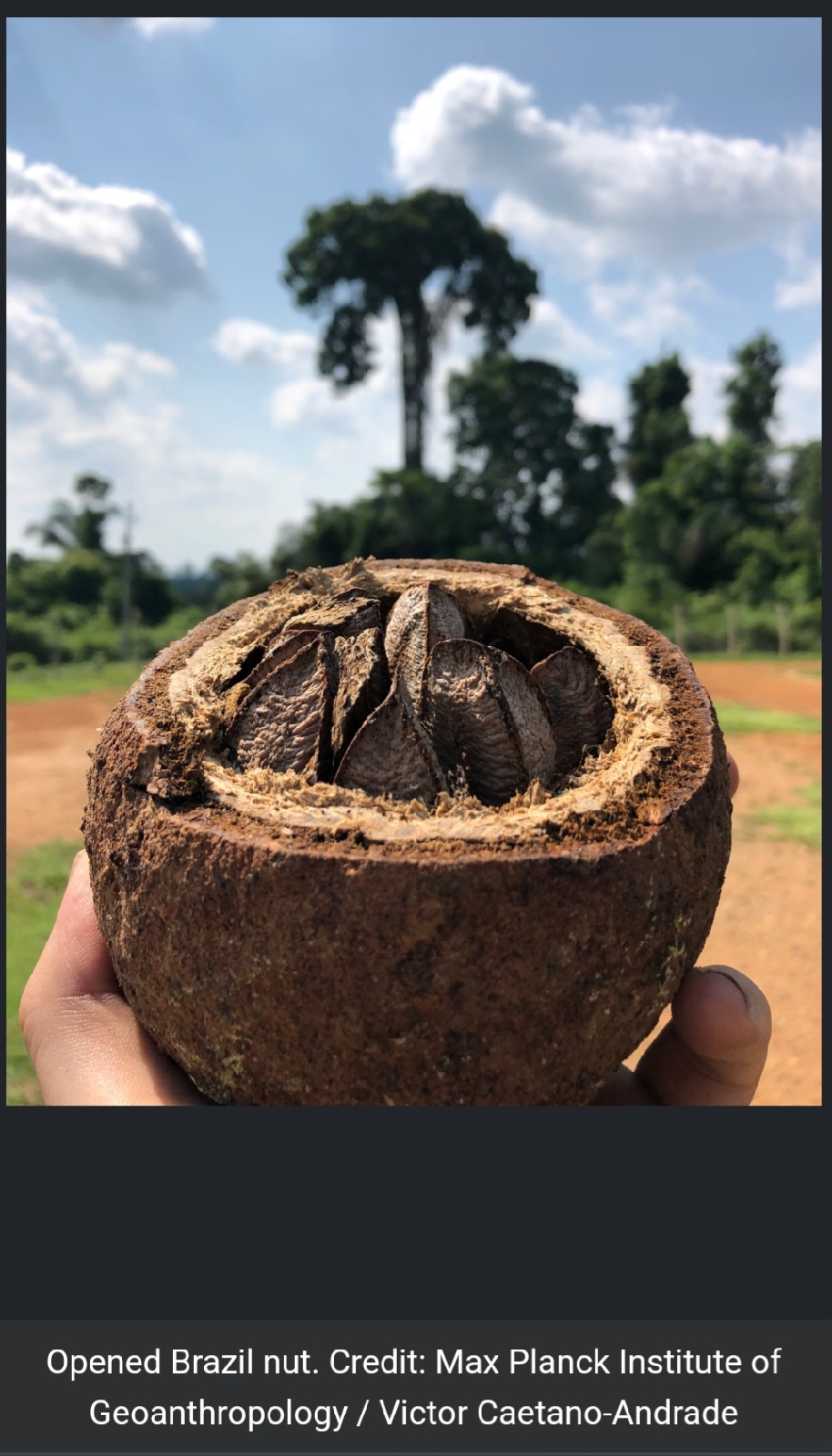

Genomic analyses reveal human activity's vital role in Amazonian species' genetic makeup

Researchers from the German Max Planck Institutes of Geoanthropology and Biology Tübingen use genomic data to study the decline in genetic diversity in the Amazon Basin, particularly in Brazil Nut trees.

The research aims to understand this keystone species' genetic health and adaptability, help reconstruct its demographic history, and assess the long-term impacts of human interaction on forest ecosystems. The findings emphasize the need for conservation strategies to consider both ecological and anthropogenic factors.

The significant decline in genetic diversity in the Amazon Basin, following historical events such as European colonization, deforestation and the extinction of megafauna such as the sloth—the main seed dispersal agents, is of particular concern for the genetic health of Brazil Nut trees (Bertholletia excelsa).

As one of the most impacted keystone species in rainforests, Brazil Nut trees are essential for biodiversity and a vital income source for local economies.

A crucial study led by researchers from the Max Planck Institute of Geoanthropology and the Max Planck Institute for Biology Tübingen unveils critical insights into the species' genetic diversity and population dynamics, providing valuable anthropocentric and biological information for this threatened forest ecosystem.

The research is published in the journal Current Biology.

"This research provides an amazing opportunity to study how human actions, even in the distant past, have affected genetic makeup in a wild species over short time scales," stated Detlef Weigel, Director of the Department of Molecular Biology at the Max Planck Institute for Biology Tübingen.

Genomic analyses reveal the importance of Indigenous management practices

Using advanced genomic techniques, the researchers comprehensively analyzed total sequence variants of 270 Brazil Nut tree samples with known archaeological evidence at different locations to reveal insights into genetic structure and gene flow.

The study provides detailed genomic data, including identifying over 126,000 genetic variants in Brazil Nut, providing valuable insights into the genetic health and adaptability of the species in the face of environmental changes.


Home
Nanotechnology
Physics
Earth
Astronomy & Space
Chemistry
Biology
Other Sciences
 1
Jan 24, 2025
Biology Ecology
Biology Molecular & Computational biology
 The GIST
 Editors' notes
Genomic analyses reveal human activity's vital role in Amazonian species' genetic makeup
by Max Planck Society

How human activity has shaped Brazil Nut forests' past and future
An example of a Brazil nut tree in the Amazon Basin. Credit: Max Planck Institute of Geoanthropology/ Victor Caetano-Andrade

Researchers from the German Max Planck Institutes of Geoanthropology and Biology Tübingen use genomic data to study the decline in genetic diversity in the Amazon Basin, particularly in Brazil Nut trees.


The research aims to understand this keystone species' genetic health and adaptability, help reconstruct its demographic history, and assess the long-term impacts of human interaction on forest ecosystems. The findings emphasize the need for conservation strategies to consider both ecological and anthropogenic factors.

The significant decline in genetic diversity in the Amazon Basin, following historical events such as European colonization, deforestation and the extinction of megafauna such as the sloth—the main seed dispersal agents, is of particular concern for the genetic health of Brazil Nut trees (Bertholletia excelsa).

As one of the most impacted keystone species in rainforests, Brazil Nut trees are essential for biodiversity and a vital income source for local economies.

A crucial study led by researchers from the Max Planck Institute of Geoanthropology and the Max Planck Institute for Biology Tübingen unveils critical insights into the species' genetic diversity and population dynamics, providing valuable anthropocentric and biological information for this threatened forest ecosystem.

The research is published in the journal Current Biology.

"This research provides an amazing opportunity to study how human actions, even in the distant past, have affected genetic makeup in a wild species over short time scales," stated Detlef Weigel, Director of the Department of Molecular Biology at the Max Planck Institute for Biology Tübingen.


Genomic analyses reveal the importance of Indigenous management practices
Using advanced genomic techniques, the researchers comprehensively analyzed total sequence variants of 270 Brazil Nut tree samples with known archaeological evidence at different locations to reveal insights into genetic structure and gene flow.

The study provides detailed genomic data, including identifying over 126,000 genetic variants in Brazil Nut, providing valuable insights into the genetic health and adaptability of the species in the face of environmental changes.

How human activity has shaped Brazil Nut forests' past and future

Sale of Brazil nuts at a local market. Credit: Max Planck Institute of Geoanthropology/ Victor Caetano-Andrade

The findings indicate that while the genetic diversity of Brazil Nut has drastically declined compared to other species over the last 20,000 years, the areas with a history of Indigenous management show more complex genetic backgrounds. The study reveals the connection between the plants and Indigenous land stewardship.

In particular, younger trees in the protected Tefé National Forest (TEF), estimated to be under 200 years old, exhibit complex genetic backgrounds compared to other studied groups, likely due to natural disturbances and local communities' management.

This genetic diversity is crucial for the species' resilience and adaptability in the face of environmental changes. Traditional ecological practices may promote the species' genetic diversity and health, providing a model for sustainable management.

Victor Caetano-Andrade, Postdoctoral researcher in the Department of Coevolution of Land Use and Urbanization at the Max Planck Institute of Geoanthropology, explains, "We aimed to bridge gaps in our understanding of the long-term anthropogenic influences on forest ecosystems. Our findings demonstrate how Indigenous land management practices play a significant role in maintaining the genetic diversity of Brazil nut populations."

Promoting collaboration between scientists and local Indigenous land stewards and their historical ecological knowledge has the potential to create more effective and inclusive conservation policies.

Looking ahead, the researchers plan to expand their studies to include more regions and additional species within the Amazon rainforest. The goal is to develop comprehensive conservation frameworks that protect Brazil Nut trees and enhance the ecosystem's resilience.

Source: HERE


Brief Explanation of What is Conservation

Conservation refers to the protection, preservation, management, or restoration of natural environments and the ecological communities that inhabit them. It involves the careful use and management of natural resources to ensure their long-term sustainability.

Here are some key aspects of conservation:
 * Protection of natural resources: This includes protecting forests, wetlands, oceans, and other ecosystems from destruction or degradation.
 * Preservation of biodiversity: Conserving diverse species of plants and animals and their habitats.
 * Sustainable use of resources: Using natural resources in a way that meets current needs without compromising future generations' ability to meet their own needs.
 * Restoration of damaged ecosystems: Repairing ecosystems that have been damaged or degraded.
Conservation efforts are crucial for maintaining a healthy planet and ensuring the well-being of both humans and wildlife.
 * https://www.kariega.co.za/blog/world-conservation-day-bring-back-biodiversity